
Abstract
This analysis examines the common industry query, “Are Groove Lock and Victaulic the same?” It clarifies that “Victaulic” is a brand name for a company that pioneered the mechanical grooved pipe joining system, while “Groove Lock” or “grooved coupling” refers to the technology itself. The document explores the nuanced relationship between the brand and the method, addressing critical aspects of interchangeability, performance standards, and manufacturing variations. It investigates the material science of ductile iron couplings, the chemical properties of gaskets, and the precise engineering of groove specifications. By comparing the original system with products from other manufacturers, this paper provides a comprehensive framework for understanding compatibility issues, the significance of third-party certifications like UL and FM, and the economic implications of choosing between different suppliers. The objective is to equip professionals with the knowledge to differentiate between the proprietary brand and the generic technology, enabling informed decisions for various applications, including fire protection and HVAC systems.
Key Takeaways
- Victaulic is a brand; “groove lock” is the generic name for the pipe joining method.
- Fittings from different manufacturers are not always interchangeable due to tolerance differences.
- Verify UL and FM certifications to ensure performance standards for fire protection systems.
- Consider the total installed cost, not just the price per fitting.
- High-quality grooved pipe fittings offer a reliable alternative to premium brands.
- The question “Are Groove Lock and Victaulic the same?” has a nuanced, technical answer.
- Proper groove specification and gasket material are vital for a leak-free seal.
Table of Contents
- Are Groove Lock and Victaulic the same? An Introduction to a Common Industry Question
- Fact 1: Victaulic Is a Brand, “Groove Lock” Is a Technology
- Fact 2: Not All Grooved Systems Are Interchangeable
- Fact 3: Performance and Quality Can Vary by Manufacturer
- Fact 4: Cost-Effectiveness Depends on Project Scale and Labor
- Fact 5: Application-Specific Designs Define Suitability
- A Final Perspective on Brand vs. Technology
- Frequently Asked Questions (FAQ)
- References
Are Groove Lock and Victaulic the same? An Introduction to a Common Industry Question
In the world of piping systems, few questions create as much confusion as the one that pits a brand name against a technology: “Are Groove Lock and Victaulic the same?” It is a query born from decades of market dominance, where a single company’s name becomes so intertwined with its invention that it transcends its status as a proper noun. Think of how we ask for a “Kleenex” instead of a tissue, or “Google” something instead of searching for it online. This is the heart of the matter when we discuss Victaulic.
To approach this question with the seriousness it deserves, we must move beyond a simple yes or no. The answer requires a journey back in time to the trenches of World War I, an exploration of material science, and a practical look at the realities of a modern construction site. It is a discussion about safety, reliability, and economics. For the engineer designing a high-rise fire protection system, the contractor bidding on a massive HVAC project, or the facility manager responsible for maintaining a critical industrial pipeline, the distinction is not merely academic; it has profound real-world consequences.
This guide is structured to deconstruct the confusion layer by layer. We will begin by establishing the fundamental difference between the brand and the method. From there, we will delve into the five critical facts that every professional should understand. We will examine the technical nuances of compatibility, the benchmarks of quality and performance, the economic calculations that drive project decisions, and the specialized applications that demand specific solutions. Through this structured exploration, the initial question evolves into a deeper understanding of the entire grooved mechanical piping ecosystem. Our aim is not just to provide an answer, but to cultivate a form of practical wisdom that empowers you to make better, safer, and more cost-effective decisions for your projects.
Fact 1: Victaulic Is a Brand, “Groove Lock” Is a Technology
The primary source of confusion when asking “Are Groove Lock and Victaulic the same?” stems from the phenomenon of the genericized trademark. Victaulic, the company, was the innovator, the first to successfully commercialize the grooved mechanical pipe joining method. Their success was so profound that their brand name became the de facto term for the technology itself in many circles. To clarify this, one must separate the historical entity from the mechanical principle.
The Genesis of the Victaulic Method
The story begins in the crucible of World War I. An English engineer, Ernest Tribe, sought a faster, more reliable way to join pipes for deploying fuel and water lines to the front. The traditional methods of the era—welding, flanging, or threading—were slow, cumbersome, and often impractical in the harsh conditions of the battlefield. Tribe conceived of a revolutionary idea: a mechanical coupling that would use a gasket to seal the joint and a housing to grip grooves rolled into the pipe ends. The name itself, “Victaulic,” is a portmanteau of “Victory” and “Hydraulics,” a testament to its wartime origins and purpose (Victaulic, 2023).
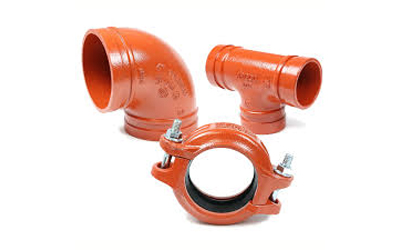
The design was elegant in its simplicity and effectiveness. It consisted of four key components:
- Grooved Pipe: A groove is cold-formed or machined near the end of each pipe. This groove provides the surface for the coupling to grip.
- Gasket: A resilient elastomeric gasket is placed over the pipe ends. When the coupling is installed, the gasket is compressed, creating a triple-seal against the pipe surfaces and the coupling housing.
- Coupling Housings: Segmented ductile iron housings are placed over the gasket. The “keys” on the inside of the housings engage with the grooves on the pipes.
- Bolts and Nuts: A pair of bolts and nuts are tightened, drawing the housing segments together. This action secures the coupling onto the pipe and compresses the gasket, completing the seal.
This system offered unprecedented speed of assembly and disassembly without the need for heat or complex tooling. It also introduced a degree of flexibility, allowing for deflection, expansion, and contraction, which was a significant advantage over rigid welded systems.
Defining “Groove Lock” as a Generic Term
Following the expiration of Victaulic’s original patents, other manufacturers began to produce their own versions of mechanical grooved pipe joining systems. These systems operate on the exact same principle pioneered by Victaulic. The term “Groove Lock” (or “groovelock”) emerged as one of several generic descriptors for this type of mechanical joint, alongside “grooved coupling” and “mechanical coupling.”
Therefore, while Victaulic manufactures “groove lock” style fittings, not all “groove lock” fittings are made by Victaulic. Many other companies, such as Jianzhi, Anvil, and Shurjoint, produce extensive lines of high-quality grooved pipe fittings that are used in applications worldwide. These companies have introduced their own innovations in metallurgy, gasket technology, and specialized coupling designs.
The relationship can be summarized in a simple table:
| Term | Definition | Example |
|---|---|---|
| Victaulic | A specific brand and company that manufactures grooved couplings and other piping solutions. | A Victaulic Style 77 Flexible Coupling. |
| Groove Lock | A generic term for the mechanical pipe joining technology that uses grooved pipe ends. | A grooved mechanical tee used to add a branch line to a system. |
Understanding this distinction is the first and most crucial step in navigating the market. It allows one to evaluate products based on their technical merits, certifications, and suitability for a specific application, rather than relying on a brand name alone. It opens the door to considering a wider range of suppliers who may offer comparable or even superior solutions in terms of quality, availability, and cost.
Fact 2: Not All Grooved Systems Are Interchangeable
Once we accept that “Victaulic” is a brand and “groove lock” is a technology, the next logical question arises: can you mix and match components from different manufacturers? If they all use the same basic principle, surely a 4-inch coupling from one brand will fit a 4-inch coupling from another. The answer, however, is a firm and resounding “no.” This is a point of critical importance for safety, liability, and system integrity.
The reasons for this lack of interchangeability are rooted in the fine details of engineering and manufacturing—details that are not always apparent to the naked eye. Third-party testing and certification agencies, such as Underwriters Laboratories (UL) and FM Global (FM), list or approve grooved piping components as a complete system from a single manufacturer. They do not test or approve the mixing of components. Using a gasket from one brand with a housing from another, for instance, voids the UL/FM approval and can lead to catastrophic failure.
The Nuances of Groove and Housing Tolerances
While manufacturers generally adhere to standard pipe outside diameters (OD), the specific dimensions and tolerances of the grooves and the coupling housings are often proprietary. Let’s break down the key variables:
- Groove Dimensions: The width, depth, and flare angle of the groove are critical. A manufacturer designs their coupling housing keys to fit their specific groove profile perfectly. A slight mismatch—a key that is too loose in the groove or one that doesn’t seat properly—can compromise the joint’s ability to withstand pressure, bending loads, and vibration.
- Housing Dimensions: The distance between the key and the bolt pads, the angle of the housing halves, and the overall casting tolerances are engineered to work in concert with a specific gasket.
- Gasket Cross-Section: Gaskets are not simple O-rings. They have complex cross-sectional profiles designed to seal against the pipe ends and the inner cavity of the specific housing. Using a gasket in a housing for which it was not designed can result in improper compression—either too much, which can damage the gasket, or too little, which will inevitably lead to leaks.
The potential consequences of mixing components range from nuisance leaks to catastrophic joint separation under pressure, which in a fire protection system could be disastrous.
Gasket Composition and Compatibility
Beyond physical dimensions, the chemical composition of the gasket is paramount. Gaskets are not a one-size-fits-all component; they are specialized elastomers designed for specific services.
| Gasket Type | Common Name | Temperature Range | Recommended Service | Not Recommended For |
|---|---|---|---|---|
| Grade “E” EPDM | EPDM | -30°F to +230°F (-34°C to +110°C) | Hot and cold water, dilute acids, some chemicals, air (oil-free) | Petroleum oils, hydrocarbons, halogenated solvents |
| Grade “T” Nitrile | Nitrile, NBR | -20°F to +180°F (-29°C to +82°C) | Petroleum products, hydrocarbons, vegetable and mineral oils, air (with oil vapors) | Hot water, steam, ketones, phosphate esters |
| Grade “O” Fluoroelastomer | Viton™ | +20°F to +300°F (-7°C to +149°C) | Many oxidizing acids, petroleum oils, halogenated hydrocarbons, lubricants | Steam, hot water, amines, ketones |
| Grade “L” Silicone | Silicone | -30°F to +350°F (-34°C to +177°C) | Dry heat, certain oils, some animal and vegetable fats | Hot water, steam, ketones, petroleum fluids |
A manufacturer’s color-coding system for gaskets is proprietary. For example, a green-striped gasket from one manufacturer may indicate EPDM, while a green stripe from another may signify something entirely different. Relying on color alone to determine gasket type across brands is a dangerous assumption. Always refer to the manufacturer’s specific documentation. The question “Are Groove Lock and Victaulic the same?” is definitively answered with a “no” when it comes to the chemical and physical specifics of their gaskets.
Advanced Grooving Systems (AGS)
The issue of interchangeability becomes even more pronounced with large-diameter piping systems. Victaulic developed the Advanced Groove System (AGS) for pipes from 14 to 60 inches. This system uses a wider and deeper groove profile than the standard roll groove, providing a more robust and rigid joint for high-pressure applications. AGS couplings are completely incompatible with standard grooved pipe and fittings. Attempting to install an AGS coupling on a standard groove, or vice versa, is impossible and highlights the proprietary nature of specialized systems within a single brand’s portfolio.
In summary, while the grooved concept is universal, the execution is proprietary. For the sake of safety, performance, and warranty, you must always use couplings, gaskets, and fittings from a single manufacturer as an integrated system.
Fact 3: Performance and Quality Can Vary by Manufacturer
With the understanding that components are not interchangeable, the focus shifts to evaluating the quality of a single manufacturer’s system. While Victaulic set the original standard, the idea that they are the only source of high-quality grooved components is a misconception. The modern global market, as of 2026, includes numerous reputable manufacturers who produce groove fitting pipe systems that meet or exceed rigorous international standards. The discerning professional must learn to assess quality based on objective criteria rather than brand recognition alone.
The Critical Role of Material Science
The performance of a grooved coupling begins with the raw materials. The vast majority of grooved coupling housings are made from ductile iron, a material with a remarkable combination of strength and ductility.
The manufacturing process for ductile iron is a feat of modern metallurgy. It starts with high-quality scrap steel and pig iron, which are melted in an induction furnace. The molten iron’s chemistry is carefully controlled. Just before casting, a crucial step occurs: a small, precise amount of magnesium is added to the melt. This process, known as nodularization, transforms the graphite microstructure of the iron. In standard gray cast iron, the graphite exists as sharp flakes, which act as stress points and make the material brittle. In ductile iron, the magnesium forces the graphite to form spherical nodules (Askeland & Wright, 2015).
Imagine scattering a handful of sharp, flat shards of glass onto a carpet versus scattering smooth, round marbles. If you were to put pressure on the carpet, the sharp shards would concentrate the stress at their tips, easily leading to a tear. The round marbles, however, would distribute the stress evenly. This is analogous to how ductile iron resists fracture compared to gray iron. The rounded graphite nodules prevent cracks from propagating, giving the material its signature “ductility” or ability to deform under stress before fracturing.
Quality manufacturers like Jianzhi Casting Group use advanced analytical techniques, such as spectrometry, to verify the chemical composition of every batch of iron. They also perform mechanical testing, including tensile strength and elongation tests, to ensure the final product meets standards like ASTM A536, “Standard Specification for Ductile Iron Castings.” A lower-quality manufacturer might cut corners by using inferior raw materials or having poor control over the nodularization process, resulting in a product that may look identical but lacks the necessary strength and ductility to perform safely under pressure.
Manufacturing Precision and Quality Control
Beyond the material itself, the casting and machining processes are paramount. A high-quality manufacturer employs automated molding lines to ensure consistency and dimensional accuracy in the raw castings. After casting, the components undergo heat treatment to relieve internal stresses and refine the microstructure, further enhancing their mechanical properties.
The most critical manufacturing step is the machining of the key and bolt pad areas. These surfaces must be machined to tight tolerances to ensure proper engagement with the pipe groove and even distribution of clamping force. Advanced manufacturers use CNC (Computer Numerical Control) machines for this process, which guarantees a level of precision and repeatability that is impossible to achieve with manual methods.
Finally, a comprehensive quality control program is the hallmark of a top-tier manufacturer. This includes:
- 100% Pressure Testing: Every single coupling housing is subjected to a hydrostatic pressure test, typically at 1.5 to 2 times its rated working pressure. This is a non-negotiable step to ensure the casting is free from porosity or other defects.
- Dimensional Inspection: Statistical process control (SPC) is used to monitor the dimensions of machined parts throughout the production run.
- Coating Adhesion Tests: Most fittings are coated with paint or epoxy for corrosion resistance. Quality checks are performed to ensure the coating adheres properly and provides a consistent thickness.
The Importance of Third-Party Certifications
For critical applications, especially fire protection, internal quality control is not enough. The system must be certified by independent, internationally recognized third-party agencies. The two most important in North America and many other parts of the world are Underwriters Laboratories (UL) and FM Global (FM).
- UL Listing: UL is a global safety certification company. When a grooved fitting is “UL Listed,” it means it has been tested to meet specific safety and performance standards for its intended use (e.g., UL 213 for Rubber Gasketed Fittings for Fire-Protection Service). The testing is rigorous and includes pressure tests, leakage tests, and material analysis. Furthermore, UL conducts regular, unannounced factory inspections to ensure the manufacturer is consistently adhering to the approved processes.
- FM Approval: FM Global is an industrial property insurance company that also sets its own, often more stringent, standards for loss prevention products. “FM Approved” signifies that a product has met these high standards through extensive testing. FM approval is highly sought after for components used in fire sprinkler systems.
When evaluating a manufacturer, the presence of UL and FM certifications is a powerful indicator of quality and reliability. It demonstrates a commitment to safety and a proven ability to manufacture products that perform under the most demanding conditions. The question “Are Groove Lock and Victaulic the same?” becomes less relevant when two different brands both carry the same UL and FM approvals for a given application, as this signifies they have met the same independent performance benchmark.
Fact 4: Cost-Effectiveness Depends on Project Scale and Labor
In any construction project, financial considerations are a driving force. The debate between using a premium brand like Victaulic and a high-quality alternative often comes down to cost. However, a simplistic comparison of the price per fitting is misleading. A true analysis of cost-effectiveness requires a more holistic approach, examining the concept of Total Installed Cost (TIC).
TIC encompasses not only the material cost of the pipes and fittings but also the labor required for installation, the cost of any specialized tools, and long-term maintenance expenses. Grooved mechanical systems, in general, offer a significant TIC advantage over traditional methods like welding or flanging, primarily through drastic reductions in labor hours. A study by the Mechanical Contractors Association of America (MCAA) found that installing a grooved system can be up to 30-50% faster than welding (MCAA, 2019).
When comparing two different brands of grooved systems, the calculation becomes more nuanced. Let’s break down the components of TIC in this context.
Material Cost vs. Value
The most visible difference is the material price. Premium, market-leading brands often command a higher price due to their extensive research and development, marketing expenses, and brand equity built over decades. Alternative manufacturers, while still investing in quality and certification, may operate with lower overhead, allowing them to offer their products at a more competitive price point.
Imagine a large-scale commercial HVAC project requiring thousands of grooved fittings. A 15-20% difference in the unit price of couplings and fittings can translate into tens or even hundreds of thousands of dollars in material savings. This is where the value proposition of a certified, high-quality alternative becomes compelling. The project manager must ask: “Am I paying for superior performance, or am I paying for a brand name?” As established in the previous section, if both products carry the necessary FM/UL certifications for the application, their performance in that context has been independently verified to meet the same standard. The savings realized by choosing the more competitively priced option can then be reallocated to other areas of the project or contribute to a more competitive bid.
The Labor Component
The primary selling point of any grooved system is the speed of installation. Unlike welding, it requires no hot work permits, no fire watch, no specialized welders, and no X-ray inspection of joints. The training required is minimal, and assembly is straightforward.
When comparing two grooved systems, the labor time is generally very similar. The process of lubricating the gasket, placing it over the pipe ends, fitting the housing segments, and tightening the bolts is nearly identical across brands. Some manufacturers might claim minor design tweaks that speed up installation, such as couplings that can be installed from one side, but these often provide only marginal time savings on a per-joint basis.
The more significant labor consideration is product availability. If a project is stalled because a specific, premium-brand fitting is on backorder for weeks, the labor costs skyrocket as crews stand idle. A manufacturer with a robust supply chain, extensive inventory, and a responsive distribution network can provide a significant, if indirect, cost advantage by ensuring materials are on-site when needed, keeping the project on schedule.
Tooling and Long-Term Maintenance
One of the benefits of the grooved system is the simplicity of the required tools. A socket wrench or impact wrench is all that is needed to assemble the joints. The primary capital expense is the grooving tool itself. Most manufacturers of grooved systems also offer their own line of grooving tools, but these tools are generally compatible with any standard pipe, regardless of which brand of fitting will be installed on it. The cost of the grooving tool is typically amortized over many projects and is not a significant factor when choosing a fitting brand for a single job.
Long-term maintenance costs for a properly installed grooved system are very low. The joints are reliable and leak-free. In the event a section of pipe needs to be accessed or replaced, the grooved joint can be disassembled by simply removing two bolts, a significant advantage over a welded system that would need to be cut out. This ease of maintenance is a feature of the technology itself, not a specific brand. As long as the installed components are of high quality and were installed correctly, the long-term maintenance profile will be similar regardless of the manufacturer.
In conclusion, when analyzing cost-effectiveness, the material savings offered by a high-quality, certified alternative manufacturer can be substantial and often represent the most significant variable in the TIC equation when comparing different grooved systems.
Fact 5: Application-Specific Designs Define Suitability
The final piece of the puzzle in understanding the grooved piping landscape lies in recognizing that not all couplings are created equal. Beyond the basic function of joining pipes, manufacturers have developed a wide array of specialized couplings and fittings designed to meet the unique demands of different applications. The choice between a “flexible” and “rigid” coupling, for example, is one of the most fundamental decisions in system design.
The question “Are Groove Lock and Victaulic the same?” finds another layer of complexity here. While all major manufacturers offer a range of both flexible and rigid couplings, the specific performance characteristics and the breadth of their specialized product lines can vary.
Flexible vs. Rigid Couplings: A Tale of Two Joints
At first glance, a flexible and a rigid grooved coupling may look very similar. They both use the same gasket and the same bolt-and-nut system. The difference lies in the internal geometry of the ductile iron housing.
- Flexible Couplings: These are the “original” style of grooved coupling. The housing is designed with a small clearance between the housing keys and the bottom of the pipe groove. This allows the joint to accommodate a controlled amount of linear movement (expansion and contraction) and angular deflection. This is invaluable in applications subject to thermal changes, seismic activity, or vibration. For example, in a long, straight run of pipe exposed to temperature swings, a series of flexible couplings can absorb the resulting expansion and contraction without the need for expansion loops or joints.
- Rigid Couplings: In a rigid coupling, the housing is designed to clamp the pipe ends tightly together, restricting axial and angular movement. The keys are designed to fit snugly into the groove, and the housing segments often feature a tongue-and-groove mechanism that interlocks, creating a rigid joint that behaves very much like a welded or flanged one. Rigid couplings are used where the designer wants to prevent movement and ensure the pipe sections act as a single, continuous unit, such as in mechanical rooms or on risers.
The choice between flexible and rigid is not arbitrary; it is a critical engineering decision dictated by the needs of the system.
Specialized Fittings for Demanding Environments
Beyond the flexible/rigid dichotomy, the world of grooved fittings includes a vast catalog of problem-solving components.
| Application | Common Challenges | Specialized Grooved Solution |
|---|---|---|
| Fire Protection | Need for fast, reliable installation; high-pressure performance; seismic resilience. | UL/FM approved flexible and rigid couplings; specialized sprinkler tees and fittings; seismic sway braces. |
| HVAC (Heating & Cooling) | Thermal expansion and contraction; vibration from pumps and chillers; noise transmission. | Flexible couplings to absorb movement and dampen vibration; dielectric fittings to prevent galvanic corrosion. |
| Mining & Slurry Transport | Abrasive wear on pipe interior; need for frequent pipe rotation and maintenance. | Heavy-duty couplings; couplings with hardened housings; easy-access couplings for quick disassembly. |
| Industrial & Process Piping | Exposure to aggressive chemicals, high temperatures, or corrosive atmospheres. | Couplings with stainless steel housings; specialized gaskets (e.g., Fluoroelastomer) for chemical compatibility. |
| Water & Wastewater | Large diameter piping; potential for ground settlement; need for corrosion resistance. | Advanced Groove Systems (AGS) for large pipes; epoxy-coated fittings for corrosion protection. |
When evaluating a manufacturer, it is important to look at the depth and breadth of their product catalog. Do they offer solutions tailored to your specific industry? Do they have the technical support and engineering data to help you select the right product for a challenging application? While a premium brand may have pioneered many of these solutions, high-quality alternative manufacturers now offer comprehensive lines of specialized fire protection grooved pipe fittings and other industrial components that are fully certified and competitively priced. The ability to source a complete, single-manufacturer system for a complex project, from standard elbows to specialized seismic joints, is a key indicator of a supplier’s capability.
A Final Perspective on Brand vs. Technology
Throughout this exploration, we have methodically disassembled the question, “Are Groove Lock and Victaulic the same?” We have seen that the answer is a complex and layered “no.” Victaulic is the pioneering brand, while “Groove Lock” is the revolutionary technology that has since been adopted and advanced by many.
The journey has taken us from the battlefields of World War I to the microscopic structure of ductile iron. We have established that components from different manufacturers are not interchangeable, a critical fact for ensuring system safety and integrity. We have also seen that quality is not the exclusive domain of a single brand; it is a measurable attribute defined by material science, manufacturing precision, and, most importantly, independent third-party certifications like UL and FM.
We have weighed the economics, moving beyond the sticker price to the more meaningful metric of Total Installed Cost, where high-quality, competitively priced alternatives present a compelling value proposition. Finally, we have appreciated the diversity of the technology, with specialized fittings designed to solve specific challenges in applications ranging from fire protection to mining.
The ultimate takeaway is a shift in perspective. Instead of asking if one brand is the same as another, the more empowering question for any engineer, contractor, or manager is: “Does this product, from this manufacturer, meet the specific performance, certification, and economic requirements of my project?” By arming yourself with an understanding of the underlying principles and the objective markers of quality, you move from being a brand-conscious consumer to a technically-informed decision-maker. You can now confidently evaluate any grooved piping system on its merits, ensuring a solution that is safe, reliable, and cost-effective for the years to come.
Frequently Asked Questions (FAQ)
Can I use a Victaulic gasket in another brand’s coupling?
No. You should never mix components from different manufacturers. Gaskets, housings, and bolts are designed and tested as a complete system. Mixing them voids UL/FM approvals, compromises the integrity of the joint, and can lead to leaks or catastrophic failure. The dimensions and gasket profiles are proprietary and not standardized across brands.
Are grooved systems from other manufacturers like Jianzhi as good as Victaulic?
High-quality manufacturers produce grooved piping systems that meet the same international standards (e.g., ASTM A536 for materials) and performance certifications (UL and FM) as the pioneering brand. When a product is UL Listed or FM Approved, it has passed rigorous independent testing for its intended application, such as in fire protection systems. Therefore, a certified product from a reputable manufacturer can be considered equivalent in performance for that specific application.
What is the main advantage of a grooved system over welding?
The primary advantage is speed, which leads to significant labor cost savings. Installing a grooved system is up to 50% faster than welding. It requires no hot work permits, no fire watch, no specialized welding skills, and no costly inspection of welds. It is also safer and cleaner, with no fumes or risk of fire during installation.
What is the difference between a roll groove and a cut groove?
A roll groove is formed by cold-pressing a groove into the pipe without removing any material. This is the most common method for standard wall pipes. A cut groove is machined into the pipe by removing material, similar to threading. This method is typically used on heavier-walled pipes or when the pipe material is not suitable for roll grooving.
How do I know which gasket material to use?
The choice of gasket depends entirely on the fluid or gas in the pipeline and the operating temperature. The most common type is Grade “E” EPDM (often with a green stripe) for water services. Grade “T” Nitrile (often with an orange stripe) is used for petroleum products. Always consult the manufacturer’s technical data sheet to select the correct gasket for your specific service to prevent chemical degradation and ensure a long-lasting seal.
Can flexible grooved couplings be used everywhere?
No. Flexible couplings are designed to accommodate thermal expansion, contraction, and seismic movement. They are ideal for long, straight runs. However, in areas where rigidity is required, such as in a pump room or on a riser, rigid couplings must be used to prevent movement and ensure the piping acts as a single, fixed unit. The choice is a critical engineering decision based on system design requirements.
Why is ductile iron used for coupling housings?
Ductile iron offers an excellent combination of high tensile strength, similar to steel, and the ability to bend or “duct” before fracturing. This makes it incredibly durable and resistant to damage from shipping, handling, and system pressures. The spherical graphite nodule structure of ductile iron is key to its superior mechanical properties compared to brittle gray cast iron.
References
Askeland, D. R., & Wright, W. J. (2015). The science and engineering of materials (7th ed.). Cengage Learning.
Mechanical Contractors Association of America (MCAA). (2019). A comparison of pipe joining methods. MCAA. Retrieved from
UL. (2018). UL 213: Standard for rubber gasketed fittings for fire-protection service. UL Standards. Retrieved from https://www.shopulstandards.com/ProductDetail.aspx?productId=UL213
Victaulic. (2023). Our history. Retrieved from
Hebei Jianzhi Casting Group Ltd. (n.d.). Grooved pipe fittings. Retrieved from
Hebei Jianzhi Casting Group Ltd. (n.d.). Malleable Iron Pipe Fittings, Cast Iron Grooved Pipe Fittings Manufacturer. Retrieved from
Hebei Jianzhi Casting Group Ltd. (n.d.). Jianzhi grooved coupling. Retrieved from https://www.jianzhifittings.com/
Hebei Jianzhi Casting Group Ltd. (n.d.). Jianzhi pipe fittings. Retrieved from
Hebei Jianzhi Casting Group Ltd. (n.d.). Grooved fittings manufacturer. Retrieved from
Hebei Jianzhi Casting Group Ltd. (n.d.). China Malleable Iron Pipe Fittings. Retrieved from