
Abstract
An examination of contemporary pipe-joining methodologies reveals a significant divergence between traditional welding practices and the modern application of grooved mechanical couplings. This analysis evaluates the comparative merits of Victaulic couplings, a prominent form of grooved mechanical joint, against the long-established practice of welding for pipe systems. The inquiry focuses on five principal domains: installation velocity, total installed cost, occupational safety, system design flexibility, and the verifiability of joint integrity. Drawing upon current industry data and engineering principles as of 2026, the investigation demonstrates that grooved pipe joining systems present a compelling alternative, frequently surpassing welding in efficiency and economic viability. The objective is to provide a clear, data-supported framework for engineers, project managers, and contractors, enabling an informed and judicious selection of pipe-joining technology. The findings suggest that the adoption of Victaulic couplings can lead to substantial reductions in project timelines and budgets while simultaneously enhancing worksite safety and providing for greater long-term system adaptability.
Key Takeaways
- Reduce project timelines by up to 50% by choosing grooved mechanical joints over welding.
- Lower total installed costs by minimizing labor hours and eliminating hot work permits.
- Enhance job site safety by removing fire hazards associated with welding.
- Incorporate Victaulic couplings for superior design flexibility and vibration attenuation.
- Streamline system maintenance and modifications with simple bolt-and-nut assembly.
- Achieve reliable, visually verifiable joint integrity without specialized testing.
Table of Contents
- A Foundational Choice: Welding Versus the Grooved Mechanical Joint
- Reason 1: Unmatched Installation Speed and Project Acceleration
- Reason 2: Superior Total Installed Cost Savings
- Reason 3: Enhanced Workplace Safety and Risk Mitigation
- Reason 4: Unprecedented Design Flexibility and System Adaptability
- Reason 5: Reliable Performance and Verifiable Joint Integrity
- Frequently Asked Questions (FAQ)
- Conclusion
- References
A Foundational Choice: Welding Versus the Grooved Mechanical Joint
The manner in which pipes are joined together represents a fundamental decision in the architecture of any fluid or gas transport system. For generations, the default method, the one taught and trusted through decades of industrial practice, has been welding. It is a process of metallurgical fusion, creating a continuous, monolithic structure that is undeniably strong. The image of a welder, shielded and focused, laying a bead of molten metal is iconic in the construction and industrial trades. Yet, to hold welding as the unquestioned standard in 2026 is to overlook a profound evolution in mechanical engineering. The alternative, the grooved mechanical joint, pioneered and popularized under the Victaulic brand, presents a different philosophy of connection.
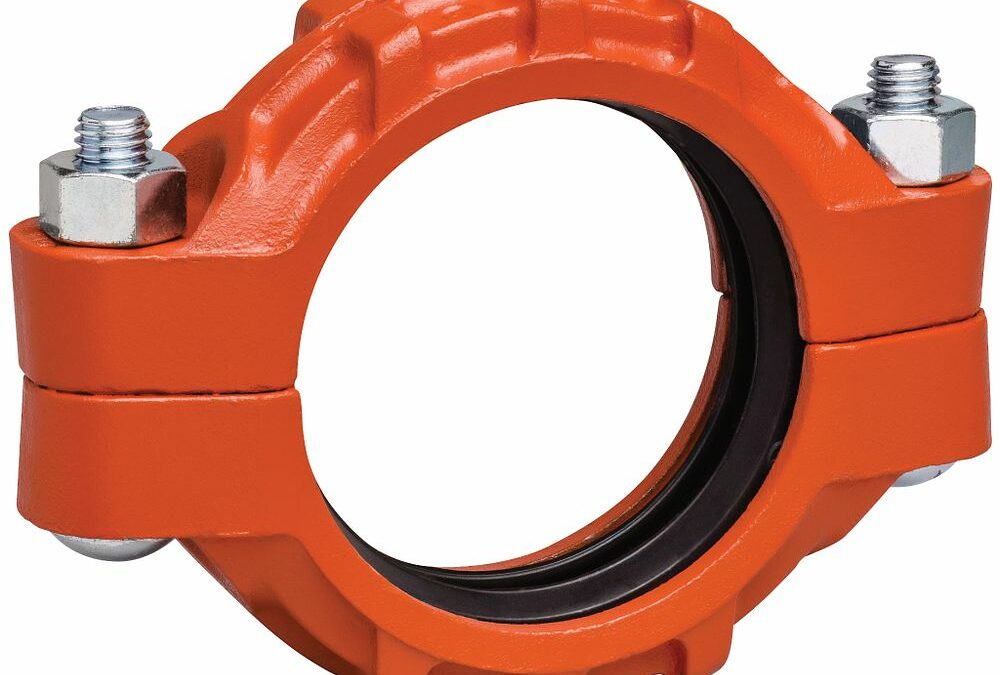
Instead of fusing metal, this method relies on mechanical principles. A groove is formed near the end of each pipe. A gasket is placed over the pipe ends, bridging the gap. Then, a segmented housing, or coupling, is fitted into the grooves and secured with bolts and nuts. This action compresses the gasket, creating a secure, leak-proof seal, and locks the pipes together. It is a method of assembly, not fusion. Thinking about this distinction is the first step toward understanding the cascading implications for a project. One method involves heat, specialized skill, and a permanent, irreversible bond. The other involves cold-formed mechanical assembly, standardized components, and a joint that can be just as easily disassembled. This paper will explore the five critical reasons why this latter approach so often emerges as the superior choice in modern applications.
Reason 1: Unmatched Installation Speed and Project Acceleration
Time, in any construction or industrial project, is not merely a measure of duration; it is a direct correlate of cost, risk, and opportunity. The ability to compress a project schedule without compromising quality is perhaps the most sought-after efficiency gain. It is in this domain of speed that the grooved mechanical coupling makes its most dramatic and immediately apparent case against traditional welding.
The Mechanics of a Grooved Joint: A Step-by-Step Breakdown
To appreciate the velocity of a grooved installation, one must first visualize the simplicity of the process. Imagine you have two pipes that need to be joined.
- Groove Formation: The first step, which can often be performed in a fabrication shop ahead of time or on-site, involves forming a circumferential groove near the end of each pipe. This is typically done with a roll grooving tool, which cold-forms the groove by displacing metal without removing any material, thus maintaining the pipe’s wall integrity. For a standard 6-inch pipe, this process can take as little as 30 to 45 seconds.
- Gasket Application: With the pipes in position, a synthetic rubber gasket is lubricated and stretched over the end of one pipe. The other pipe is then brought into contact. The gasket is centered over the two pipe ends, serving as the primary sealing element.
- Coupling Assembly: The two halves of the coupling housing are then placed over the gasket. The keys of the housing are designed to engage perfectly with the grooves in the pipes.
- Tightening: Finally, the bolts and nuts are tightened using a simple wrench. The design of the coupling ensures that when the bolt pads meet, the joint is properly secured. There is no complex torque specification; the visual cue of metal-to-metal contact is the indicator of a completed joint.
Contrast this with the workflow of a welded joint. That process involves meticulous pipe end preparation (beveling), precise alignment, multiple welding passes (root, fill, cap), inter-pass cleaning, and a cooling period. Each of these steps is time-consuming and requires a high degree of skill. Where the grooved joint is measured in minutes, the welded joint is often measured in hours, especially for larger diameter pipes.
Time-Motion Studies: Quantifying the Speed Advantage Over Welding
The anecdotal evidence of speed is compelling, but the quantitative data from time-motion studies are what provide undeniable proof. Numerous studies conducted by industry groups and independent researchers have consistently shown that installing Victaulic couplings is anywhere from three to ten times faster than welding, depending on the pipe size and application complexity.
A typical study might compare the total time required to join a 6-inch (DN150) Schedule 40 carbon steel pipe. For a welded joint, the timeline would include:
- Cut and Bevel: 10-15 minutes
- Alignment and Tacking: 15-20 minutes
- Welding Passes (e.g., 3 passes): 45-60 minutes
- Cooling and Inspection Prep: 10-15 minutes
- Total Time (approx.): 80-110 minutes
For a grooved joint on the same pipe:
- Cut and Groove: 3-5 minutes
- Assemble Coupling: 2-4 minutes
- Total Time (approx.): 5-9 minutes
The disparity is staggering. When you extrapolate this difference across a project with hundreds or thousands of joints, the cumulative time savings translate directly into weeks or even months saved on the project schedule. This acceleration allows subsequent trades to begin their work sooner, leading to a cascading effect of efficiency gains throughout the entire project lifecycle.
Reducing Labor Dependency and Skill Gaps
Welding is a craft that demands extensive training, certification, and continuous practice to maintain proficiency. The availability of certified, high-quality welders is a persistent challenge in the construction industry, and their labor rates reflect this scarcity. A project’s schedule can become entirely dependent on the availability and performance of a small pool of specialized individuals.
The installation of Victaulic couplings, by contrast, is a far more democratic process. The skills required are straightforward mechanical assembly skills. A new installer can be trained to correctly assemble a grooved joint in a matter of minutes, not years. This dramatically widens the available labor pool. Project managers are no longer beholden to a few key specialists. They can deploy their general mechanical workforce more flexibly, ensuring that the piping installation progresses smoothly and predictably, without the bottlenecks that so often plague welded projects. This reduction in the required skill level does not imply a reduction in quality; rather, the engineering of the coupling itself ensures a consistent and reliable joint, removing the element of human variability that is inherent in welding.
Case Study: A Large-Scale Commercial HVAC Retrofit
Consider the real-world scenario of a 30-story office building in a dense urban center requiring a complete HVAC system overhaul. The project entails replacing the main chiller plant and all associated chilled water piping, from 12-inch headers in the basement to 2-inch risers on the upper floors.
A welded approach would necessitate extensive hot work permits for every joint. The risk of fire would require dedicated fire watch personnel, adding significant labor cost. Fumes from welding would require complex ventilation solutions, particularly in occupied or recently renovated spaces. The sheer logistics of moving heavy welding equipment from floor to floor would be considerable. The project timeline would be extended, causing greater disruption to the building’s tenants.
Now, envision the same project using a grooved mechanical system. The pipe can be grooved in a controlled fabrication shop or on-site in a designated cold work area. The pipe sections, along with boxes of couplings and fittings, can be easily transported to each floor. A small team of mechanical installers, using only wrenches, can assemble the system rapidly. There are no fumes, no fire hazards, and no need for specialized welders. The installation is quiet, clean, and incredibly fast. System testing can occur on a floor-by-floor basis much more quickly. What might have been a six-month project with welding could conceivably be completed in three to four months using a grooved system, representing an enormous savings in labor costs and a significant reduction in tenant disruption.
Reason 2: Superior Total Installed Cost Savings
When evaluating the economics of a piping system, a myopic focus on the per-unit material cost of a fitting versus a welded elbow can be deeply misleading. A holistic perspective, one that encompasses the Total Installed Cost (TIC), reveals a different economic reality. The TIC includes not just materials, but all direct and indirect costs associated with putting that system into service: labor, equipment, consumables, inspection, and risk mitigation. It is within this comprehensive financial framework that the economic advantages of Victaulic couplings become undeniably clear.
Beyond the Material: Deconstructing the True Cost of Welding
The cost of a welded joint extends far beyond the welder’s hourly wage and the cost of the welding rod. A thorough accounting must include a host of associated expenses that are often overlooked in preliminary estimates.
- Labor Overhead: Welded systems are labor-intensive. The direct cost is not just the welder’s time but also the time of fitters, helpers, and material handlers. Crucially, it includes the cost of non-productive time, such as setup, teardown, and moving equipment.
- Specialized Equipment: Welding requires expensive capital equipment: welding machines, cable leads, grinders, and gas cylinders. These have costs related to purchase or rental, maintenance, and transportation.
- Consumables: The cost of welding rods, shielding gases, grinding discs, and personal protective equipment (PPE) like specialized helmets and leathers accumulates significantly over the course of a large project.
- Fire and Safety Mitigation: Welding is “hot work,” and the associated safety protocols are non-negotiable and costly. This includes obtaining hot work permits, clearing combustible materials, and employing dedicated fire watch personnel during and after the welding activity. The cost of liability insurance for hot work is also a substantial factor.
- Inspection and Quality Control: A welded joint’s integrity is not visible from the outside. Ensuring a quality weld often requires non-destructive testing (NDT) methods like X-ray radiography or ultrasonic testing. These are specialized, time-consuming, and expensive procedures that must be factored into the budget.
- Weather and Environmental Delays: Welding is sensitive to environmental conditions. Rain, high winds, or extreme temperatures can bring welding operations to a halt, leading to costly project delays.
A grooved system, in stark contrast, eliminates or drastically reduces nearly all of these cost categories. The labor is less specialized and faster, the only required tool is a wrench, consumables are minimal (a small amount of gasket lubricant), hot work permits and fire watch are completely eliminated, and inspection is a simple visual check.
The Predictability of Grooved Systems in Budgeting
One of the greatest challenges in project management is budget uncertainty. The multiple variables associated with welding—weather delays, welder skill variance, the potential for failed welds requiring rework—make it difficult to forecast costs with high accuracy.
Grooved mechanical joining introduces a level of predictability that is a project manager’s ally. The installation time per joint is highly consistent, regardless of pipe size or installer. This allows for the creation of highly accurate labor estimates. Since the system is not weather-dependent, a major source of schedule and cost overruns is removed. The visual inspection protocol means there are no surprise costs associated with extensive NDT or rework of failed joints. This predictability de-risks the project, allowing for more confident financial planning and reducing the need for large contingency funds. An investment in a grooved system is an investment in cost certainty. Leading manufacturers of cast iron pipe fittings, such as Jianzhi, provide components that adhere to strict manufacturing tolerances, further enhancing this predictability.
A Comparative Cost Analysis Table
To illustrate the financial disparity, consider the following table, which breaks down the estimated costs for installing a single 8-inch (DN200) carbon steel pipe joint in a typical industrial setting.
| Cost Factor | Welded Joint (Estimated) | Grooved Joint (Estimated) | Notes |
|---|---|---|---|
| Material Cost | $20 (pipe prep, no fitting) | $150 (coupling) | The only category where welding appears cheaper initially. |
| Direct Labor | $240 (3 hrs @ $80/hr) | $20 (15 min @ $80/hr) | Based on skilled welder vs. mechanical installer rates. |
| Labor Overhead | $60 (fitter, helper) | $5 (helper) | Support labor required for setup and alignment. |
| Equipment & Consumables | $35 | $2 | Welding machine, gas, rods vs. lubricant. |
| Fire Watch | $80 (2 hrs @ $40/hr) | $0 | Elimination of hot work is a major direct saving. |
| Inspection (NDT) | $150 (spot NDT) | $0 (visual inspection) | Assumes 10% of welds require radiographic testing. |
| Total Installed Cost | $585 | $177 | The TIC reveals a saving of approximately 70% per joint. |
Disclaimer: These costs are illustrative estimates for 2026 and can vary significantly based on location, labor rates, and project specifics. However, the proportional relationship holds true across most scenarios.
This table powerfully demonstrates the flaw in comparing only material costs. While the grooved coupling itself is more expensive than the “free” material of a butt-weld joint, the total installed cost is dramatically lower. The savings on labor, safety, and inspection far outweigh the initial component cost.
Long-Term Financial Implications: Maintenance and System Modifications
The economic benefits of Victaulic couplings do not end once the system is commissioned. The life cycle cost of a piping system also includes maintenance, repairs, and future modifications. In a welded system, accessing a component—like a valve or a strainer—or tying in a new branch line is a major operation. It requires shutting down the system, draining it, cutting the pipe (often requiring new hot work permits), welding in new components, and extensive testing.
With a grooved system, the same task is remarkably simple. Two couplings can be unbolted, a section of pipe removed, the new component inserted, and the couplings re-fastened. A process that could take a full day in a welded system can be accomplished in under an hour. This ease of access and modification is a profound long-term asset. It reduces downtime, lowers maintenance labor costs, and makes the entire system more adaptable to future needs. The initial investment in a grooved system pays dividends throughout the entire operational life of the facility.
Reason 3: Enhanced Workplace Safety and Risk Mitigation
In the hierarchy of project priorities, the safety and well-being of the workforce must be paramount. A project that is completed ahead of schedule and under budget but results in injury is a failure. The choice of pipe-joining technology has a direct and profound impact on the safety profile of a construction site. The elimination of hot work by using grooved mechanical joints represents one of the single most significant safety improvements available to the modern construction industry.
Eliminating Hot Work: The Inherent Dangers of Welding Fumes and Fire Hazards
Welding, by its very nature, is a hazardous activity. The process generates intense heat, sparks, and open flames, creating a significant fire risk. According to the National Fire Protection Association (NFPA), cutting and welding operations are a leading cause of industrial fires. Combustible materials in the vicinity, even dust or vapors, can be ignited, leading to catastrophic consequences. This risk necessitates a stringent and costly set of precautions, including clearing the area, using fire-resistant blankets, and employing a dedicated fire watch.
Beyond the fire risk, there is the silent danger of welding fumes. These fumes are a complex mixture of metallic oxides, silicates, and fluorides. The specific composition depends on the metals being welded and the consumables used. The Occupational Safety and Health Administration (OSHA) has identified short-term exposure to welding fumes as a cause of respiratory irritation, nausea, and dizziness. Long-term exposure is far more sinister, linked to serious and irreversible health conditions, including various forms of cancer (particularly lung cancer), neurological damage (manganism), and chronic respiratory illnesses (siderosis, occupational asthma). Mitigating these risks requires sophisticated ventilation systems and respiratory PPE, which add complexity and cost to the operation.
Using Victaulic couplings completely sidesteps these hazards. Since it is a cold-formed mechanical process, there is no heat, no spark, and no flame. The fire risk is eliminated. The danger of toxic fume inhalation is eliminated. The worksite immediately becomes a safer place for everyone, not just the pipe installers, but for all adjacent trades working concurrently.
Regulatory Compliance and Insurance Benefits in 2026
The regulatory landscape surrounding workplace safety is continually evolving and becoming more stringent. In 2026, compliance with OSHA and NFPA standards regarding hot work is not optional. The documentation, permits, and procedural requirements are extensive. Failure to comply can result in heavy fines, work stoppages, and legal liability in the event of an accident. By choosing a grooved system, a project manager effectively designs these hazards out of the project from the beginning. This simplifies compliance, reduces paperwork, and demonstrates a proactive commitment to safety that is viewed favorably by regulatory bodies.
This commitment to safety also translates into tangible financial benefits in the form of insurance premiums. Insurance carriers assess risk when determining rates for general liability and workers’ compensation policies. A project that involves extensive hot work is inherently riskier than one that does not. Companies that standardize on grooved mechanical joining can often negotiate lower insurance premiums because they have demonstrably reduced their risk profile. This saving, while indirect, contributes to the overall economic advantage of the grooved system.
The Ergonomics of Mechanical Joining vs. Welding
Workplace safety also encompasses ergonomics and the prevention of musculoskeletal injuries. Welding often requires installers to work in awkward and physically demanding positions for extended periods—crouching, kneeling, or reaching overhead—to access a joint. The weight of the welding leads and the repetitive motions of grinding and welding contribute to strains, sprains, and long-term cumulative trauma disorders.
The assembly of a grooved joint is ergonomically superior. The tools are lightweight hand tools. The process is fast, reducing the time spent in any single position. In many cases, the pipe can be rotated to allow the installer to assemble the coupling from an optimal, comfortable position. This reduction in physical strain not only contributes to the long-term health of the workforce but also improves daily productivity by reducing fatigue. A less-fatigued worker is a more focused, productive, and safer worker.
A Safer Environment for Concurrent Project Trades
A construction project is a complex choreography of multiple trades working in close proximity. The hazards of welding do not exist in a vacuum; they affect everyone on the site. The bright arc of a weld requires warning signs and screens to prevent “arc eye” (a painful burn to the cornea) in passersby. The fumes generated can drift into other work areas. The fire hazard requires that other trades, such as painters or insulators using flammable materials, must vacate the area, leading to scheduling conflicts and project delays.
A site utilizing grooved mechanical systems is a more collaborative and efficient environment. Without the dangers of hot work, other trades can work alongside or in sequence with the pipe fitters without interruption or risk. An electrician can run conduit, a drywall installer can hang board, and an insulator can wrap adjacent pipes without having to clear the area for a welder. This ability to safely parallel-track activities is another way in which grooved systems accelerate the overall project schedule, creating a virtuous cycle of safety and efficiency. The choice to use a system like Victaulic couplings is a choice to foster a safer, more integrated, and more productive job site for every person involved.
Reason 4: Unprecedented Design Flexibility and System Adaptability
Piping systems are not static entities. They are dynamic systems that must contend with movement, vibration, and the inevitable need for future change. A well-designed system is not just strong; it is resilient and adaptable. It is in this capacity for managed movement and ease of modification that grooved mechanical systems offer a level of design freedom that rigid, welded systems simply cannot match.
Accommodating Deflection, Expansion, and Contraction
All piping systems are subject to movement. Thermal expansion and contraction, caused by temperature fluctuations in the fluid or the ambient environment, can exert immense stress on a piping system. A long, straight run of welded steel pipe can generate thousands of pounds of force as it expands, potentially damaging anchors, supports, and equipment nozzles. Building settlement and seismic events introduce other powerful deflection forces.
Traditionally, welded systems accommodate this movement through the use of complex and space-consuming expansion loops or expensive bellows-style expansion joints. These are engineered solutions, but they add significant material cost, take up valuable real estate within the building, and introduce their own points of potential failure.
Flexible Victaulic couplings offer a more elegant, integrated solution. The design of a flexible grooved coupling allows for a controlled amount of linear expansion/contraction and angular deflection at every joint. The coupling housing is intentionally designed with slightly more room around the pipe ends than a rigid coupling, and the gasket is shaped to accommodate this movement while maintaining a positive seal. By incorporating flexible couplings at regular intervals, the entire pipeline can absorb thermal movement and deflection along its length. This often eliminates the need for separate expansion loops, simplifying the design, saving space, and reducing cost. The system becomes an assembly of short pipe segments connected by flexible joints, capable of snaking and adjusting to imposed forces, rather than resisting them as a rigid monolith. This is a fundamentally more resilient design philosophy.
The Role of Flexible vs. Rigid Victaulic Couplings
It is important to understand that the Victaulic system is not a one-size-fits-all solution; it is a toolbox that includes both flexible and rigid couplings, allowing the designer to specify the right joint for the right location.
- Flexible Couplings: As described above, these are designed to accommodate movement. They are ideal for thermal expansion, seismic mitigation, and vibration attenuation. They allow a controlled amount of angular, linear, and rotational movement at the joint.
- Rigid Couplings: These couplings are designed to provide a joint that is functionally rigid, behaving much like a welded or flanged joint. The housing segments feature a tongue-and-groove design that grips the pipe ends firmly, preventing flexion. Rigid couplings are used where the designer wants to create a fixed point in the system, such as on long, straight runs where pipe guiding is critical, or at connections to valves and equipment to prevent the transfer of bending moments.
A skilled designer will use a combination of both types. For example, they might use rigid couplings on a pump header to ensure alignment and then transition to flexible couplings on the distribution lines to absorb vibration and thermal movement. This ability to precisely control where the system is rigid and where it is flexible provides an unparalleled level of design control.
Simplifying System Maintenance, Upgrades, and Expansion
The operational life of a building or industrial plant is long, and its needs will change. Processes are updated, tenants change, and equipment is replaced. A piping system must be able to adapt to these changes. Here, the difference between a welded and a grooved system is profound.
Consider the simple task of replacing a worn-out pump. In a welded system, this is a major undertaking. The pipes must be cut, the old pump removed, the new pump positioned, and new pipe spools welded into place. Hot work permits are required, the system must be drained for an extended period, and the risk of collateral damage is high.
In a system built with Victaulic couplings, the same task is trivial. The two couplings connecting the pump are unbolted, the pump is swapped out, and the couplings are re-fastened. The downtime is measured in minutes or hours, not days. This same principle applies to any system modification. Adding a new branch line, inserting a new valve, or re-routing a section of pipe is a simple mechanical procedure. This inherent adaptability is a massive long-term advantage, reducing future maintenance costs and ensuring the building’s infrastructure can evolve with its occupants’ needs. Exploring the specific differences is helpful, and there are resources available for understanding the nuances of groove lock pipe fittings compared to other mechanical systems.
A Comparison of System Flexibility
The following table summarizes the key differences in adaptability between welded and grooved piping systems.
| Attribute | Welded System | Grooved System (using Flexible/Rigid Couplings) | Advantage |
|---|---|---|---|
| Thermal Expansion | Requires large expansion loops or bellows. | Accommodated by flexible couplings at each joint. | Grooved (Space & Cost) |
| Seismic Deflection | Prone to stress fractures; requires special seismic loops. | Flexible couplings allow multi-axial movement. | Grooved (Resilience) |
| Vibration Attenuation | Transmits vibration along the pipe. | Flexible couplings dampen and isolate vibration. | Grooved (Equipment Protection) |
| Noise Reduction | Transmits system noise. | Gasket material breaks the metal-to-metal path. | Grooved (Acoustics) |
| System Access | Requires cutting the pipe. | Simple unbolting of couplings. | Grooved (Maintenance Speed) |
| Future Modifications | Major project involving hot work. | Simple mechanical addition/removal of components. | Grooved (Adaptability) |
This table shows that for nearly every measure of flexibility and long-term adaptability, the grooved system offers a superior solution. It allows engineers to design systems that are not just strong upon installation, but are resilient, maintainable, and ready for the future.
Reason 5: Reliable Performance and Verifiable Joint Integrity
A piping system’s primary function is to contain and transport a medium, often under pressure. The reliability of every single joint is therefore not just a matter of performance, but of safety and operational continuity. A failure can be catastrophic. The final, compelling reason to choose a grooved system lies in its unique combination of robust performance engineering and the simple, unambiguous way its integrity can be verified.
The Science Behind the Gasket and Housing: Creating a Triple-Seal
The heart of the Victaulic coupling’s reliability is the engineered relationship between the gasket and the housing. It is not simply a matter of squeezing a piece of rubber. The design creates a dynamic, pressure-responsive seal.
- The Initial Seal: When the coupling housing is tightened, the bolts draw the segments together, compressing the gasket. This compression creates an initial positive seal against the pipe surfaces, making the joint leak-tight even in a zero-pressure or vacuum state.
- The Pressure-Responsive Seal: The real genius of the design becomes apparent when the system is pressurized. The C-shaped profile of the gasket is designed to use the line pressure to enhance the seal. As pressure is introduced into the pipe, it acts on the inside lips of the “C,” forcing them into tighter contact with the pipe surfaces. The higher the internal pressure, the stronger the sealing force becomes. This creates a self-energizing seal that is incredibly robust.
- The Mechanical Lock: The housing itself provides the mechanical restraint, locking into the grooves to prevent the pipes from pulling apart under pressure, bending, or rotating (in the case of a rigid coupling).
This combination of an initial compression seal, a pressure-energized secondary seal, and a robust mechanical lock provides multiple layers of security. The materials themselves are chosen for long-term performance. Gaskets are available in a wide range of synthetic rubbers (EPDM for water services, Nitrile for petroleum products, etc.) to ensure chemical compatibility and long service life. The ductile iron housings provide immense strength and durability. This is not a temporary fix; it is a permanent, engineered connection. The market for these components is robust, with numerous manufacturers producing a wide array of compatible parts for various systems.
Visual Inspection vs. Non-Destructive Testing (NDT) for Welds
Perhaps the most underrated advantage of the grooved system is the simplicity of its quality control. The integrity of a welded joint is hidden. A weld can look perfect on the surface (the “cap pass”) but contain hidden defects within, such as lack of fusion, porosity, or slag inclusions. These defects can create stress risers that may lead to failure over time. To find them requires expensive and time-consuming NDT methods like radiography (X-ray) or ultrasonic testing. Even then, interpreting the results requires a certified technician. It is a complex and imperfect process.
The integrity of a grooved joint, by contrast, is externally verifiable with a simple visual inspection. The design of the Victaulic coupling incorporates bolt pads that meet when the joint is properly installed. The installer tightens the nuts until the pads make metal-to-metal contact. That’s it. There is no torque specification to measure and no hidden variables. A site superintendent can walk the line and, at a glance, confirm that every joint is correctly installed simply by checking that the bolt pads are touching. This 100% visual confirmation provides an exceptionally high degree of quality assurance with virtually no cost or delay. If the pads meet, the gasket is properly compressed, and the housing is properly seated in the groove. The joint is secure. This simple, foolproof verification method removes immense uncertainty from the construction process.
Performance in Demanding Applications: Fire Protection and Seismic Zones
The reliability of grooved mechanical joints is not just theoretical; it is proven in some of the most demanding and life-critical applications imaginable.
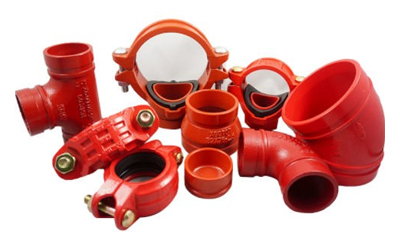
Fire Protection Systems: Grooved systems are the dominant pipe-joining method in the fire sprinkler industry. Their speed of installation is a major benefit, but their reliability is the primary reason for their ubiquity. Fire protection systems must remain dormant, often for decades, and then perform perfectly in an emergency. Grooved joints, which are listed and approved by major safety agencies like Underwriters Laboratories (UL) and Factory Mutual (FM), have demonstrated this long-term reliability. The use of specific fire protection grooved pipe fittings ensures compliance with the stringent codes governing these life-safety systems.
Seismic Applications: In earthquake-prone regions, piping systems must be able to withstand significant movement and shaking without failing. The inherent flexibility of grooved joints makes them an ideal solution for seismic applications. Flexible couplings allow the pipeline to move with the building during a seismic event, dissipating energy and preventing the catastrophic stress fractures that can occur in rigid, welded systems. This performance is so well-recognized that codes like NFPA 13 specifically mandate flexible couplings or other seismic separation assemblies in certain areas of fire sprinkler systems to ensure they remain operational after an earthquake.
Understanding Material Compatibility and Corrosion Resistance
The long-term performance of any piping system also depends on managing corrosion. Victaulic couplings and grooved fittings are available in a variety of materials and coatings to suit different environments. Standard couplings are typically made from high-strength ductile iron with a protective paint coating. For more corrosive environments, options like hot-dip galvanizing or specialized coatings are available. Furthermore, couplings and fittings are also manufactured in stainless steel and other alloys for use in process industries, food and beverage production, or desalination plants where corrosion resistance is paramount.
The gasket itself forms a barrier that can help mitigate certain types of galvanic corrosion by separating dissimilar pipe materials. The key to long-term reliability is selecting the correct combination of housing material, coating, and gasket compound for the specific medium being transported and the external environment. This material science aspect is a core part of the engineering support provided by manufacturers, ensuring that the specified system will deliver safe and reliable performance for decades.
Frequently Asked Questions (FAQ)
Are Victaulic and grooved couplings the same thing? Victaulic is the brand name of the company that invented and popularized the grooved mechanical coupling method. While the term “Victaulic coupling” is often used generically to refer to any grooved coupling, much like “Kleenex” is used for tissues, other companies also manufacture grooved pipe fittings. Victaulic remains a leading manufacturer, but the general technology is known as a grooved mechanical joint.
Can grooved couplings be used for any type of pipe? Grooved systems are incredibly versatile and can be used on a wide range of pipe materials. This includes carbon steel, stainless steel, copper, aluminum, ductile iron, PVC, and HDPE. The key is that the pipe must be capable of being grooved. The method of grooving (roll grooving vs. cut grooving) and the specific coupling and gasket are chosen based on the pipe material and application.
What is the pressure rating of a typical grooved coupling? Pressure ratings vary widely depending on the type of coupling (e.g., rigid, flexible, heavy-duty), the pipe size, and the pipe’s wall thickness. However, standard grooved couplings can often handle pressures up to 1,000 psi (approximately 69 bar) and in some cases, much higher with specialized heavy-duty couplings. It is essential to consult the manufacturer’s technical specifications for the specific product being used.
Is special training required to install grooved couplings? No extensive certification is required. The installation process is straightforward and can be learned quickly by any mechanical worker. The key steps are proper pipe preparation, gasket lubrication, and tightening the bolts until the bolt pads meet. Manufacturers typically provide simple, clear installation instructions and on-site training if needed. This simplicity is a major advantage over the extensive training required for certified welding.
How do grooved systems handle thermal expansion and contraction? Flexible grooved couplings are specifically designed to accommodate thermal movement. Each flexible joint allows for a small amount of linear and angular movement. When installed along a pipeline, the cumulative effect of these small movements can absorb significant thermal expansion and contraction without the need for large, space-consuming expansion loops, simplifying the design and reducing installation costs.
Are these couplings suitable for fire protection systems? Absolutely. Grooved mechanical joining is the predominant method used for fire sprinkler systems worldwide. Products intended for these applications, often referred to as fire protection grooved pipe fittings, are specifically tested and listed by safety agencies like UL and FM to ensure they meet the rigorous performance and reliability standards required for life-safety systems.
What is the difference between a rigid and a flexible grooved coupling? A flexible coupling is designed to allow a controlled amount of linear, angular, and rotational movement at the joint to accommodate thermal changes, vibration, and seismic activity. A rigid coupling is designed with a tongue-and-groove mechanism that grips the pipe to form a mechanically rigid joint, similar in function to a welded or flanged connection, preventing movement. Designers use a combination of both to control the pipe system’s behavior.
Conclusion
The decision between welding and mechanical joining is a pivotal one, with consequences that ripple through a project’s schedule, budget, safety record, and long-term performance. While welding has a long and storied history, a dispassionate analysis grounded in the realities of 2026 demonstrates that grooved mechanical systems, exemplified by Victaulic couplings, offer a superior value proposition in a vast array of applications.
The evidence is compelling. Grooved systems provide a dramatic acceleration of the installation process, translating directly into substantial savings on total installed cost, primarily through the reduction of specialized labor hours and the complete elimination of hot work. This removal of fire and fume hazards fundamentally transforms the safety profile of a worksite, protecting workers and reducing liability. Beyond the immediate benefits of construction, the inherent flexibility of the system provides engineers with a powerful tool to manage thermal expansion, vibration, and seismic forces, while the ease of disassembly ensures that the piping infrastructure remains adaptable and cost-effective to maintain for decades to come. Finally, the simple, visually verifiable nature of the joint provides a level of quality assurance that complex, hidden-weld inspections cannot easily match. To choose a grooved system is not to compromise on strength or reliability; it is to embrace a smarter, faster, safer, and more adaptable method of engineering connection for the modern world.
References
Jianzhi. (2022, January 17). About us. Jianzhi Grooved Coupling. Retrieved from https://www.jianzhifittings.com/about-us/
Jianzhi. (2023, May 25). JIANZHI grooved fittings – A leading pipe fitting producer in China. Jianzhi Pipe Fittings. Retrieved from 2023/05/25/jianzhi-grooved-fittings-a-leading-pipe-fitting-producer-in-china/
Jianzhi. (2024, May 18). Grooved fittings. Jianzhi Pipe Fittings. Retrieved from
Jianzhi. (n.d.-a). Grooved pipe couplings and fittings. Jianzhi Grooved Coupling. Retrieved from https://www.jianzhifittings.com/products/
Jianzhi. (n.d.-b). Jianzhi grooved coupling. Retrieved from https://www.jianzhifittings.com/
Jianzhi. (n.d.-c). Malleable iron pipe fittings, cast iron grooved pipe fittings manufacturer. Jianzhi Pipe Fittings. Retrieved from
Jianzhi. (n.d.-d). China malleable cast iron pipe fittings & malleable iron pipe fittings manufacturers. Jianzhi Pipe Fittings. Retrieved from https://www.jianzhipipefitting.com/