
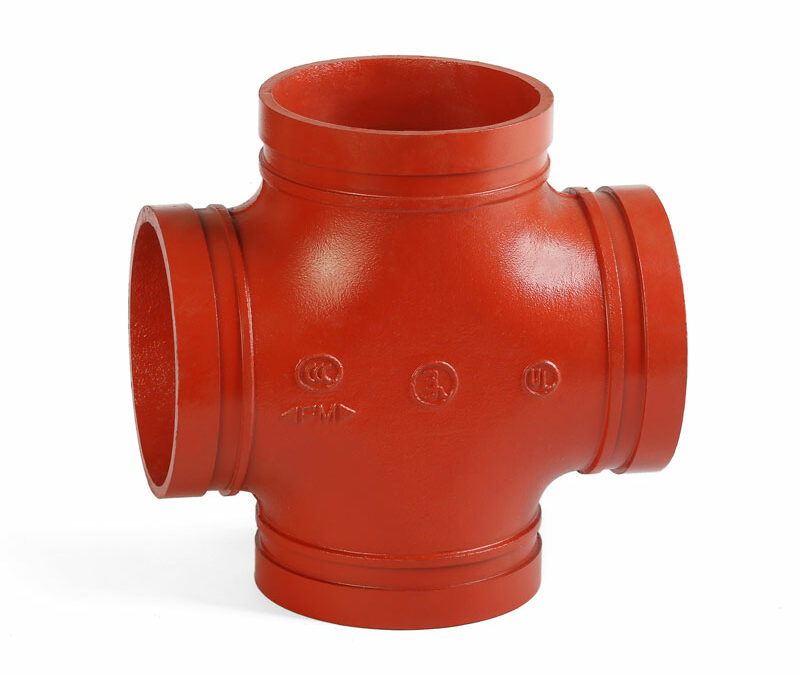
In many industrial, construction, and plumbing projects, galvanized pipes are widely used for their corrosion resistance and mechanical strength. Traditionally, these pipes are connected through threaded joints. However, in modern applications, threaded connections are not always possible or desirable. This leads to a common engineering question: how to join galvanized pipe without threads?
The answer lies in modern mechanical connection technologies, especially galvanized pipe connectors, which allow fast, secure, and reliable joining without cutting threads.
This article explains the main non-threaded connection methods, their advantages, and how professional pipe fitting manufacturers support these solutions.

Why Avoid Threads in Galvanized Pipe Systems
Threaded connections have been used for decades, but they also introduce several limitations.
Threading removes part of the zinc coating, exposing bare steel to corrosion. It weakens the pipe wall at the joint. It requires specialized tools and labor. In large projects, threading also increases installation time and cost.
In systems where speed, flexibility, or corrosion protection are critical, non-threaded connections are becoming the preferred solution.
That is why many engineers now choose galvanized pipe connectors instead of traditional threaded fittings.
Mechanical Couplings as the Main Solution
The most common way to join galvanized pipe without threads is by using mechanical couplings.
These connectors work by clamping around the outer surface of the pipe using rubber gaskets and metal housings. When tightened, they create a sealed and pressure-resistant joint without altering the pipe structure.
Mechanical couplings offer several advantages:
- No threading or welding required
- No damage to zinc coating
- Fast installation
- Easy disassembly
- Suitable for maintenance and modification
This makes them ideal for fire protection systems, HVAC pipelines, industrial water lines, and temporary installations.
Compression and Clamp-Type Connectors
Another popular solution involves compression-type or clamp-style connectors.
These fittings use internal seals and external clamps to grip the pipe. They rely on mechanical force rather than threads to hold the connection.
Compression connectors are often used in:
- Low to medium pressure systems
- Residential plumbing
- Agricultural irrigation
- Modular pipe structures
They provide a clean and simple way to connect pipes where threading is not practical.
Grooved Couplings for Industrial Systems
Grooved coupling systems are widely used in commercial and industrial piping.
The pipe ends are grooved using a special tool, and then connected with a coupling that includes a gasket and housing.
Although this requires grooving, it still avoids traditional threading and preserves more pipe strength.
Grooved systems are commonly applied in:
- Fire sprinkler pipelines
- Large-scale HVAC systems
- Industrial cooling systems
- Mining and infrastructure projects
Grooved couplings are considered one of the most reliable non-threaded solutions for galvanized steel pipes.
Why Galvanized Pipe Connectors Are Becoming Standard
Modern construction and industrial engineering prioritize efficiency, safety, and long-term reliability.
Compared with threading, non-threaded connectors offer:
- Faster installation time
- Lower labor cost
- Reduced risk of leakage
- Better corrosion protection
- Easier system modification
This is why galvanized pipe connectors are now standard components in many global projects.
They allow engineers to build modular systems that can be expanded, repaired, or reconfigured without cutting or re-threading pipes.
The Role of Professional Pipe Fitting Manufacturers
The quality of connectors directly determines system reliability.
Low-quality fittings may lead to gasket failure, pressure leakage, or mechanical instability. That is why sourcing from professional manufacturers is critical.
A specialized supplier like malleable pipe fittings focuses on producing high-precision connectors, couplings, and fittings for industrial-grade piping systems.
Jianzhi Pipe Fitting offers:
- Ductile and malleable iron fittings
- Galvanized and black coated products
- OEM and ODM solutions
- International standard compliance
Their products are designed for long-term mechanical stability and real-world operating conditions.
Real Engineering Scenarios Without Threads
In renovation projects, existing pipes may not allow re-threading due to space limitations. In fire protection systems, threaded joints may weaken structural integrity. In temporary industrial systems, speed and flexibility are more important than permanent joints.
In all these cases, non-threaded connection methods become the optimal choice.
Engineers often rely on mechanical and clamp-type connectors as described in galvanized pipe connectors technical solutions.
These systems eliminate the need for heavy threading tools and reduce on-site labor.
Pressure Performance and Safety Considerations
A common concern is whether non-threaded connectors can handle high pressure.
High-quality mechanical and grooved connectors are tested for:
- Working pressure
- Burst pressure
- Vibration resistance
- Thermal expansion
In many applications, they perform equally or better than threaded joints.
In fact, because they do not weaken the pipe wall, non-threaded connectors often provide better long-term safety.
Installation Efficiency and Cost Advantages
From a project management perspective, time equals cost.
Non-threaded connectors reduce installation time by:
- Eliminating threading processes
- Reducing labor skill requirements
- Allowing faster assembly
- Simplifying maintenance
In large-scale projects, this translates into significant cost savings.
That is why more contractors and system integrators prefer mechanical connection systems.
Final Thoughts
So, how to join galvanized pipe without threads? The modern answer is clear: use mechanical, compression, or grooved galvanized pipe connectors.
These systems provide faster installation, better corrosion protection, easier maintenance, and higher system flexibility.
With the support of professional manufacturers and industrial-grade fittings, non-threaded pipe connections are no longer an alternative solution — they are becoming the industry standard.
In today’s engineering environment, efficiency and reliability start with smart connection technology.