
Abstract
The selection of a grooved mechanical coupling is a decision with far-reaching implications for the operational integrity, safety, and economic efficiency of piping systems. This analysis examines the seven critical factors that inform this selection process in 2026. It moves beyond a superficial overview to provide a deep, nuanced exploration of pressure and temperature ratings, material science of housings and gaskets, and the specific demands of diverse applications such as fire protection and HVAC. The discourse further investigates the subtleties of pipe compatibility, the functional dichotomy between flexible and rigid couplings, the non-negotiable importance of regulatory certifications, and a holistic view of total ownership cost. By breaking down these complex engineering considerations into accessible components, this guide serves as a foundational text for engineers, project managers, and technicians. The objective is to foster a comprehensive understanding that empowers stakeholders to make informed, data-driven decisions, thereby ensuring the long-term reliability and performance of the mechanical pipe joining system.

Key Takeaways
- Verify that pressure and temperature ratings exceed the system’s maximum operating conditions.
- Select gasket materials based on the specific fluid and temperature range of your application.
- Choose a flexible or rigid grooved mechanical coupling based on system movement needs.
- Confirm that the coupling holds the necessary certifications, like UL or FM, for its intended use.
- Evaluate the total cost, including installation speed and reduced maintenance, not just the unit price.
- Ensure proper pipe end preparation and grooving for a secure, leak-free seal.
- Consider the unique demands of your system, whether it is for fire protection, HVAC, or industrial use.
Table of Contents
- Factor 1: Scrutinizing Pressure and Temperature Capabilities
- Factor 2: The Foundational Choice of Housing and Gasket Materials
- Factor 3: Aligning the Coupling with Its Intended Application
- Factor 4: Ensuring Seamless Pipe Compatibility and Preparation
- Factor 5: Deciphering the Roles of Flexible versus Rigid Couplings
- Factor 6: The Indispensable Role of Certifications and Standards
- Factor 7: Evaluating Installation Efficiency and Long-Term Ownership Costs
- Frequently Asked Questions (FAQ)
- Conclusion
- References
Factor 1: Scrutinizing Pressure and Temperature Capabilities
When we begin the process of selecting a grooved mechanical coupling, our first and most fundamental responsibility is to the physical forces the system will endure. Imagine a piping system as a circulatory system for a building or industrial plant. The pressure within these pipes is like blood pressure, and the temperature is like body temperature. If the components containing these forces are not robust enough, the consequences can range from minor leaks to catastrophic failures. Therefore, a meticulous examination of pressure and temperature ratings is not merely a technical checkbox; it is the cornerstone of a safe and reliable design.
The pressure rating of a grooved mechanical coupling represents the maximum internal pressure it can safely withstand during operation. This is not a number to be taken lightly or to be matched exactly to your system’s expected operating pressure. A professional approach demands a significant safety margin. Think of it like a bridge rated to hold 10 tons. You would not feel comfortable driving a 9.9-ton truck over it repeatedly, day after day. You would want the bridge’s capacity to be substantially higher than any load it is ever expected to carry. The same principle applies here.
Understanding Pressure Ratings: Working Pressure vs. Test Pressure
It is vital to distinguish between two figures you might encounter: working pressure and test pressure. The working pressure is the maximum continuous pressure the coupling is designed to handle throughout its service life. This is the primary number you will use to specify a component for your system. For instance, a system that operates at 200 PSI (pounds per square inch) should use couplings rated well above this, perhaps at 300 PSI or higher, depending on the application and governing codes.
The test pressure, on the other hand, is a higher value used during manufacturing or system commissioning to verify integrity. A system is often hydrostatically tested at 1.5 times its working pressure for a short duration. The coupling must be able to withstand this test pressure without failure, but it is not designed to operate at this level continuously. Confusing these two values can lead to a dangerous under-specification of components.
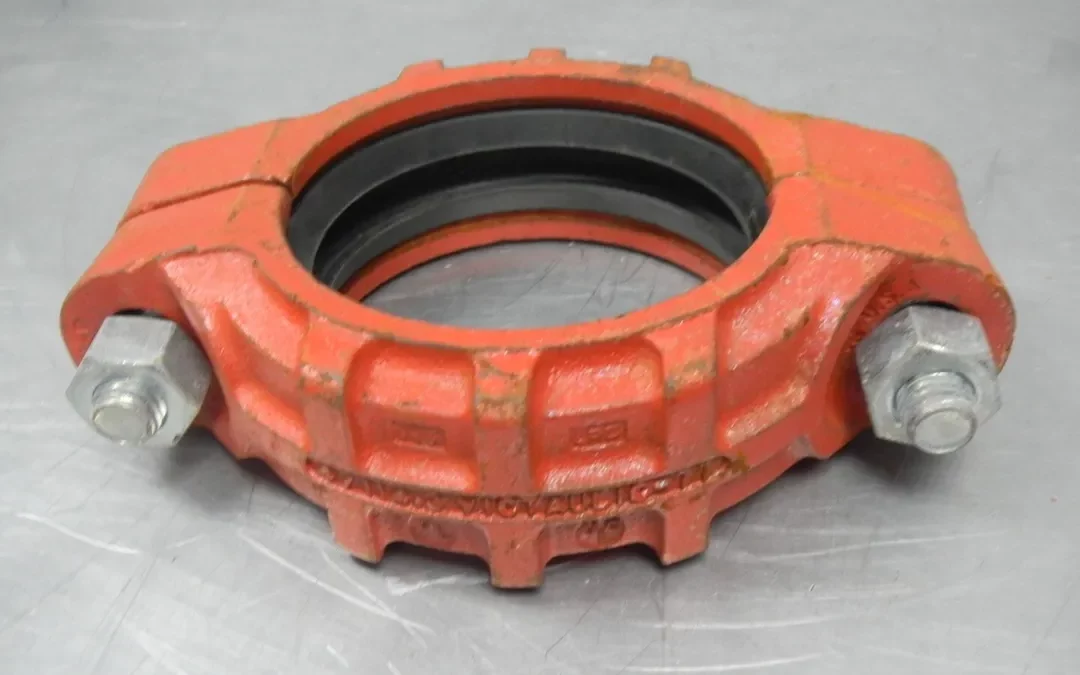
The pressure-retaining capability of a grooved mechanical coupling is a function of several interacting elements: the strength of the ductile iron housing, the design of the locking bolts, and the resilience of the gasket. As the bolts are tightened, they draw the housing segments together, firmly seating them in the grooves of the pipe. This action simultaneously compresses the elastomer gasket, creating a positive seal. The internal pressure of the fluid then acts on the gasket, further energizing it and enhancing the seal’s effectiveness. This clever design, often referred to as a “C-shaped” gasket, uses the system’s own pressure to reinforce the joint’s integrity.
A critical concept to grasp is the relationship between pipe diameter and pressure rating. Generally, for a given coupling model, the maximum pressure rating decreases as the pipe diameter increases. This is a matter of simple physics. The total force exerted on the coupling is the pressure multiplied by the internal area of the pipe (Force = Pressure × Area). As the pipe diameter grows, the surface area the pressure acts upon increases quadratically, resulting in a much larger total force that the coupling must restrain.
Consider the following table, which illustrates a typical relationship between pipe size and pressure rating for a standard rigid grooved mechanical coupling.
| Nominal Pipe Size (NPS) | Wall Thickness (Schedule) | Max. Working Pressure (PSI) |
|---|---|---|
| 2 inches | Sch. 40 | 1000 PSI |
| 4 inches | Sch. 40 | 1000 PSI |
| 6 inches | Sch. 40 | 750 PSI |
| 8 inches | Sch. 40 | 600 PSI |
| 12 inches | Sch. 40 | 500 PSI |
As you can see, the pressure capability is not constant across all sizes. A specifier who assumes a 1000 PSI rating is available for a 12-inch pipe, based on their experience with 4-inch pipes, would be making a significant error. Always consult the manufacturer’s specific technical data sheets for the exact size and pipe schedule you are using.
The Influence of Temperature on Performance
Just as pressure exerts a force from within, temperature exerts its own profound influence on every component of the grooved mechanical coupling. This influence is twofold: it affects the mechanical properties of the housing and bolts, and, more critically, it affects the performance and lifespan of the elastomeric gasket.
The ductile iron housing and steel bolts are generally quite stable across the temperature ranges seen in most HVAC and fire protection systems (e.g., -30°F to 230°F or -34°C to 110°C). Ductile iron, a material championed by manufacturers like , is known for its excellent performance in both cold and elevated temperatures compared to more brittle materials (Jianzhi Casting Group, n.d.-b). However, in industrial applications involving steam, high-temperature fluids, or cryogenic liquids, the material selection for the housing itself might require special consideration for alloys designed for those extremes.
The true protagonist in the story of temperature is the gasket. Each type of elastomer (which we will explore in detail in the next section) has a specific temperature range within which it performs optimally. Exceeding this range can have severe consequences.
If the temperature is too high, the elastomer can undergo permanent deformation (compression set), become brittle, or even degrade chemically. A gasket that has lost its elasticity can no longer effectively fill the gaps and imperfections between the pipe and the coupling, leading to leaks, especially during system temperature cycles.
Conversely, if the temperature is too low, the gasket can lose its flexibility and become hard, almost glass-like. This is known as the glass transition temperature. A gasket that has hardened due to cold cannot properly seal the joint, and it becomes vulnerable to cracking and failure, particularly if the system is subject to vibration or movement.
Therefore, selecting a grooved mechanical coupling requires you to know not just the average operating temperature but the full range of expected temperatures, including potential excursions during startup, shutdown, or process upsets. A system designed for chilled water at 40°F (4°C) might experience ambient temperatures of 100°F (38°C) when shut down in the summer. The chosen gasket must be able to handle this entire range without degradation.
In summary, the pressure and temperature ratings are not just numbers on a data sheet. They are the fundamental language that describes the physical limits of the component. To ignore them or to interpret them loosely is to invite risk. A deep, respectful understanding of these parameters is the first step toward building a piping system that is not only functional but also enduring and safe.
Factor 2: The Foundational Choice of Housing and Gasket Materials
Having established the critical boundaries of pressure and temperature, we now turn our attention to the very substance of the grooved mechanical coupling: its materials. The choice of materials for the housing and the gasket is not a matter of arbitrary selection; it is a deliberate act of engineering that directly determines the coupling’s strength, corrosion resistance, and ultimate lifespan. A coupling is an assembly of parts working in concert, and the integrity of the whole is entirely dependent on the suitability of each part for its specific role.
The two main components we must consider are the housing segments, which provide the structural strength, and the gasket, which provides the seal. Let us think of the housing as the skeleton of the joint—rigid, strong, and load-bearing. The gasket, then, is the soft tissue—flexible, resilient, and responsible for containing the system fluid. Both must be chosen with a clear understanding of the mechanical stresses and the chemical environment they will face.
The Heart of the Coupling: Ductile Iron Housing
The overwhelming majority of grooved mechanical coupling housings are manufactured from ductile iron. This is not by accident or for lack of other options. Ductile iron, specifically conforming to standards like ASTM A536, Grade 65-45-12, offers a superior combination of properties that make it uniquely suited for this application.
To appreciate ductile iron, it helps to understand its predecessor, gray cast iron. Traditional cast iron is strong under compression but brittle under tension and prone to fracture. The graphite within its microstructure exists as sharp flakes, which act as internal stress points, making it susceptible to cracking. Ductile iron, through a treatment process involving magnesium, transforms these graphite flakes into spherical nodules. Imagine the difference between a pile of potato chips and a pile of marbles. The “marbles” of graphite in ductile iron allow the surrounding iron matrix to bend and deform under stress without fracturing, giving the material its characteristic ductility.
This ductility is paramount for a grooved mechanical coupling. During installation, as the bolts are tightened, the housing must conform to the pipe grooves without cracking. Throughout its service life, it must withstand system vibrations, pressure surges (water hammer), and potential external impacts. The toughness of ASTM A536 ductile iron ensures it can absorb these stresses. The grade designation “65-45-12” itself tells a story: it signifies a minimum tensile strength of 65,000 PSI, a minimum yield strength of 45,000 PSI, and a minimum elongation (a measure of ductility) of 12%. This combination of high strength and the ability to bend before breaking makes it an exceptionally reliable material for pressure containment.
Furthermore, these housings are almost always protected by a coating. This can be a standard paint finish (often in a signature color like orange or red) or a more robust coating like hot-dip galvanization for enhanced corrosion resistance in wet or outdoor environments. For extremely corrosive environments, such as those found in desalination plants or chemical processing, some manufacturers offer stainless steel or duplex stainless steel housings, though these come at a significant cost premium. However, for the vast majority of applications, from fire sprinkler systems to commercial HVAC, the proven performance of coated ductile iron makes it the material of choice. Leading suppliers, including those with decades of experience like , have built their reputation on the quality and consistency of their iron castings (Jianzhi Casting Group, n.d.-a).
The Unsung Hero: Selecting the Right Gasket Elastomer
If the housing is the skeleton, the gasket is the heart and soul of the grooved joint. It is the component that performs the actual sealing. No matter how strong the housing is, if the gasket fails, the joint fails. The selection of the gasket material, or elastomer, is therefore one of the most critical decisions in specifying a grooved mechanical coupling. This choice is dictated almost entirely by two factors: the chemical composition of the fluid being transported and the temperature range of the system.
There is no “one-size-fits-all” gasket. Using the wrong elastomer for an application can lead to rapid degradation, loss of sealing ability, and eventual leakage. Let us examine the most common options and their intended uses.
| Gasket Material | Common Name | Typical Temperature Range | Primary Applications & Characteristics |
|---|---|---|---|
| EPDM | Ethylene Propylene Diene Monomer | -30°F to +230°F (-34°C to +110°C) | Water Services: Hot/cold potable water, fire protection, HVAC, wastewater. Excellent resistance to water, ozone, and sunlight. Not suitable for petroleum oils or hydrocarbon fuels. |
| Nitrile (NBR) | Nitrile Butadiene Rubber | -20°F to +180°F (-29°C to +82°C) | Petroleum Services: Petroleum products, oils, hydrocarbon fuels, air with oil vapors. Good resistance to oils and solvents. Less resistant to ozone and weathering than EPDM. |
| Silicone | Phenyl Polysiloxane | -30°F to +350°F (-34°C to +177°C) | High-Temperature Applications: Dry heat, certain high-temperature industrial processes. Excellent high-temperature stability. Poor tensile strength and tear resistance, making it unsuitable for high-pressure dynamic systems. |
| Fluoroelastomer (FKM) | Viton™ | 0°F to +300°F (-18°C to +149°C) | Aggressive Chemicals & High Temps: Many acids, chemicals, and oils at elevated temperatures. Excellent chemical resistance. High cost and poor low-temperature performance. |
Grade “E” EPDM: This is the most common and versatile gasket material. Its excellent resistance to hot and cold water, along with its durability against weathering and ozone, makes it the standard choice for fire protection systems, domestic water lines, and most HVAC applications. When you order a standard grooved mechanical coupling, it will almost certainly come with an EPDM gasket unless you specify otherwise. It is important to remember its primary limitation: it swells and degrades when exposed to petroleum products.
Grade “T” Nitrile (NBR): When the piping system is carrying petroleum-based fluids—such as fuel, lubricating oils, or compressed air that may contain oil from the compressor—Nitrile is the correct choice. Its chemical structure is designed to resist swelling and degradation from these hydrocarbons. However, it is less resistant to environmental factors like ozone and UV light compared to EPDM, so its use in outdoor, exposed applications should be carefully considered.
Specialty Gaskets (Silicone, Fluoroelastomer, etc.): For applications outside the mainstream, specialty elastomers are required. Silicone gaskets are specified for high-temperature, dry-heat environments, like certain parts of a dry sprinkler system in an industrial oven area. Fluoroelastomers like Viton™ are reserved for highly aggressive chemical services where the cost is justified by the need for extreme chemical resistance.
Making the right material choice requires a deep dialogue between the system designer and the component supplier. You must have a complete and accurate understanding of your system’s fluid media. What might seem like “water” could contain treatment chemicals, antifreeze (glycols), or mineral oils that could be incompatible with standard EPDM. A moment of inquiry at the design stage can prevent years of maintenance headaches and potential system failures. The material science of the grooved mechanical coupling is not an esoteric detail; it is the fundamental basis of its function and reliability.
Factor 3: Aligning the Coupling with Its Intended Application
A grooved mechanical coupling is a versatile tool, but it is not a universal solution. The true mark of an expert specifier is the ability to match the specific features and capabilities of a coupling to the unique demands of its intended service. The requirements for a fire protection system in a high-rise building are profoundly different from those for a chilled water loop in a data center or a slurry line in a mining operation. Treating all applications as the same is a path to inefficiency at best and failure at worst. We must therefore adopt an application-centric mindset, examining how the operational context shapes our selection criteria.
Let’s consider the three most prevalent application areas for the grooved mechanical coupling: fire protection, HVAC (Heating, Ventilation, and Air Conditioning), and industrial piping. Each of these domains imposes its own set of pressures, temperatures, materials, and, crucially, regulatory requirements that guide our choices.
The Demands of Fire Protection Systems
Nowhere is the reliability of a pipe joint more critical than in a fire protection system. These systems lie dormant for years, even decades, yet they must function perfectly and instantly when called upon in an emergency. There is no room for error. This life-safety context places a heavy emphasis on third-party testing and approvals.
In the world of fire protection, the most recognized approval bodies are Underwriters Laboratories (UL) and FM Global (FM). A grooved mechanical coupling intended for this service must be “Listed” by UL and/or “Approved” by FM. These are not just stamps of quality; they are certifications verifying that the product has been subjected to a rigorous battery of tests specific to fire service. These tests include leakage tests, hydrostatic pressure tests to several times the rated pressure, and tests for vibration, assembly, and bending (FM Approvals, 2019). Specifying a non-listed coupling for a fire sprinkler system is not only a violation of most building codes (like NFPA 13, the Standard for the Installation of Sprinkler Systems) but also a serious liability.
The material choices within fire protection are fairly standardized. Systems are almost exclusively water-based (or foam/water), making Grade “E” EPDM the universal gasket choice due to its excellent long-term stability in water. Housings are typically painted ductile iron, with red being the conventional color for fire service components.
A key consideration is the type of sprinkler system. In a “wet” system, the pipes are always filled with water. In a “dry” or “pre-action” system, used in areas subject to freezing, the pipes are filled with pressurized air or nitrogen, and water only enters when a sprinkler head activates. While the same grooved mechanical coupling is often used for both, the dry system environment can be more corrosive over the long term, as trapped moisture and oxygen create an ideal environment for corrosion. Some authorities having jurisdiction (AHJs) may prefer or require galvanized pipe and couplings for dry systems to mitigate this risk.
The choice between a rigid and flexible grooved mechanical coupling also takes on special significance in seismic zones. Flexible couplings are strategically placed to allow for differential movement between building sections or at drops to sprinkler heads, preventing pipe shear during an earthquake. This is a specific design requirement outlined in standards like NFPA 13 and is a prime example of aligning the product’s capability with a specific application hazard.
HVAC: The Realm of Thermal Expansion and Vibration
HVAC systems, which circulate hot or chilled water for climate control, present a different set of challenges. While they are not typically life-safety systems in the same way as fire protection, their reliable operation is essential for building function and occupant comfort. The dominant challenges in HVAC piping are managing thermal expansion and contraction, and isolating equipment vibration.
Piping systems expand and contract as the temperature of the fluid they carry changes. A 100-foot run of steel pipe can grow by over three-quarters of an inch when heated from 40°F to 180°F. If this movement is not accommodated, it can build up immense stress in the pipe, potentially damaging anchors, equipment nozzles, and the joints themselves. While dedicated expansion joints are used for large movements, the inherent flexibility of a standard flexible grooved mechanical coupling can absorb a significant amount of this linear expansion and contraction within the pipe-to-pipe joint itself. By allowing for controlled angular, rotational, and linear movement, these couplings can often reduce or eliminate the need for more complex expansion loops, simplifying the design. This is a perfect example of leveraging a product feature to solve a system-level problem. For an accessible explanation of how these joints function, one can refer to resources explaining what is a grooved joint.
Vibration isolation is another key role for the flexible grooved mechanical coupling in HVAC. Pumps, chillers, and air handling units are all sources of vibration and noise. If this mechanical energy is transmitted into the rigid piping network, it can travel throughout the building, creating an acoustic nuisance and potentially causing fatigue failure in pipe components over time. By installing flexible couplings at the connection points to this equipment, the elastomeric gasket acts as a damper, absorbing a significant portion of the vibration and noise. This is a much simpler and more integrated solution than installing separate, specialized flexible connectors.
The fluid in most HVAC systems is treated water, often containing glycols for freeze protection or other chemical inhibitors for corrosion control. While EPDM gaskets are suitable for most of these mixtures, it is always prudent to verify the chemical compatibility of the specific treatment package with the gasket manufacturer.
Diverse Challenges in Industrial and Mining Applications
The “industrial” category is vast and encompasses everything from chemical processing and power generation to food and beverage production and mining. The diversity of applications means that a one-size-fits-all approach is impossible. The selection of a grooved mechanical coupling in an industrial setting must begin with a thorough and uncompromising analysis of the process fluid and operating conditions.
Chemical Compatibility: This is the paramount concern. An EPDM gasket that is perfect for water will be destroyed by a solvent line. A Nitrile gasket suitable for oil will fail in an acid line. In this domain, the use of specialty gaskets like Fluoroelastomers (FKM) becomes more common. The housing material may also need to be upgraded from ductile iron to stainless steel (e.g., 304 or 316) or other exotic alloys to handle corrosive process fluids. A complete chemical compatibility chart from the coupling manufacturer becomes an indispensable tool.
Abrasion Resistance: In applications like mining, pulp and paper, or cement transport, the fluid is not a clean liquid but a slurry containing abrasive solids. In these cases, the standard grooved mechanical coupling may not be sufficient. The constant scouring action of the abrasive particles can erode both the pipe ends and the internal surfaces of the coupling. Manufacturers offer specialized solutions for these services, such as couplings with hardened internal components or flush-seal gaskets that minimize the exposure of the coupling housing to the abrasive flow. The pipe ends themselves may be flame-hardened or have welded-on hardened rings to resist wear.
Pressure and Temperature Extremes: Industrial processes can involve pressures and temperatures far beyond those seen in commercial buildings. Steam lines, for example, require couplings and gaskets specifically designed for high-temperature steam service. These often feature robust designs and specialty silicone or modified EPDM gaskets. Conversely, cryogenic applications, such as liquid nitrogen transport, require materials that retain their ductility and sealing ability at extremely low temperatures.
In essence, the application dictates the specification. By starting with a deep understanding of the system’s purpose—be it the uncompromising reliability of fire protection, the dynamic movement of HVAC, or the harsh environment of an industrial process—we can ask the right questions and select a grooved mechanical coupling that is not just a component, but a tailored solution.
Factor 4: Ensuring Seamless Pipe Compatibility and Preparation
The grooved mechanical coupling, for all its sophisticated design, is fundamentally an intermediary. It exists to join two pipes. It follows, then, that the success of the joint is as dependent on the pipes themselves as it is on the coupling. A failure to ensure compatibility between the coupling and the pipe, or a lapse in the proper preparation of the pipe ends, will undermine the integrity of the entire system. This stage of the selection and installation process demands a craftsman’s attention to detail. We must consider the pipe’s material, its dimensions, and, most importantly, the quality of the groove that forms the foundation of the connection.
Think of the pipe groove as the lock and the coupling housing as the key. If the lock is poorly made, even the most perfectly machined key will not function correctly. The security of the entire assembly rests upon the precise geometry of this groove.
The Art and Science of Grooving the Pipe
The groove is the critical feature that allows the coupling to mechanically lock onto the pipe. There are two primary methods for creating this groove: roll grooving and cut grooving. The choice between them depends on the pipe’s material, its wall thickness, and the specific requirements of the application.
Roll Grooving: This is the most common method used today, especially for steel pipe in fire protection and HVAC systems. A roll grooving machine uses a set of rollers to cold-form a groove into the pipe’s surface. One roller, the male roller, presses into the outside of the pipe, while a corresponding female roller supports the pipe from the inside. As the pipe rotates, the material is displaced, not removed, to form the groove.
The primary advantage of roll grooving is speed and efficiency. It is a fast process that can be done on-site with portable machines. Because no material is removed, it is suitable for use on standard and light-wall pipe without significantly compromising the pipe’s structural integrity. This method also results in a smooth, rounded groove profile that is gentle on the gasket. However, the process does slightly flare the inside diameter of the pipe at the groove, which can be a consideration in systems where flow characteristics are highly sensitive. Furthermore, roll grooving requires the pipe material to have sufficient ductility to be formed without cracking. It is the standard for carbon steel, stainless steel, and aluminum pipe.
Cut Grooving: As the name implies, this method involves using a lathe-like tool to cut away material from the pipe’s outer surface to form a square-shouldered groove. This was the original method of grooving pipe and is still used in specific situations.
Cut grooving is necessary for pipes that are too thick-walled or not ductile enough to be roll grooved. It is the required method for materials like cast iron or ductile iron pipe. Because it removes material, it should only be performed on heavy-walled pipe (typically Schedule 40 or greater) to ensure that the remaining wall thickness under the groove is sufficient to handle the system pressure. The resulting square groove provides a very positive engagement for the coupling, but it also creates sharper edges that can be more demanding on the gasket. The process is slower than roll grooving and generally requires the pipe to be taken to a workshop.
Regardless of the method used, the dimensions of the groove—its diameter, depth, and width—must be precise. Every coupling manufacturer provides detailed grooving specifications for their products. These specifications are not guidelines; they are strict requirements. Using a feeler gauge or a specialized “go/no-go” tape to verify the groove dimensions is a mandatory quality control step. An out-of-spec groove can lead to a host of problems, from a gasket that won’t seal properly to a coupling housing that cannot engage securely, creating a significant pull-out risk.
Matching the Coupling to the Pipe Material
While the grooved mechanical coupling system was originally developed for standard steel pipe, its application has expanded to a wide array of piping materials. However, it is crucial to verify that the coupling is designed and approved for use with the specific pipe material in your system.
Carbon Steel: This is the most common application. Standard couplings are designed to work with carbon steel pipe conforming to standards like ASTM A53. The pipe can be black, galvanized, or coated.
Stainless Steel: For corrosive environments or high-purity applications, stainless steel pipe is often used. While the grooving process is similar, there are specific considerations. Stainless steel work-hardens more than carbon steel, so grooving machines may require different roller sets and more power. To prevent contamination, it is best practice to use dedicated roller sets that are only used for stainless steel to avoid transferring carbon particles that could lead to galvanic corrosion. The couplings themselves may also be specified in stainless steel (Type 304 or 316) to match the pipe and maintain the corrosion-resistant properties of the system.
Copper Tubing: Grooved systems are also available for copper tubing (CTS – Copper Tube Size). This requires specialized, smaller couplings and grooving tools designed for the softer copper material and different tube dimensions (Types K, L, and M). These systems are popular in plumbing and some HVAC applications where copper is the preferred material. One cannot use a standard iron pipe size (IPS) coupling on copper tubing; they are not interchangeable.
Other Materials: The technology has been adapted for numerous other materials, including aluminum, PVC, and HDPE pipe. Each of these requires a specific coupling design and pipe preparation method. For instance, joining HDPE pipe often involves a grooved adapter that is thermally fused to the HDPE pipe, providing a transition to a standard grooved end that can then be joined with a mechanical coupling.
The core lesson here is that one must never assume compatibility. Always confirm with the manufacturer that the specific coupling model, gasket material, and grooving specification are appropriate for the material, diameter, and wall thickness of the pipe being used. This due diligence prevents costly rework and ensures the long-term, leak-free performance that the grooved mechanical coupling system is designed to provide. The connection is a partnership between the pipe and the coupling, and both partners must be perfectly prepared for the union.
Factor 5: Deciphering the Roles of Flexible versus Rigid Couplings
Within the family of grooved mechanical couplings, a fundamental distinction exists that defines their mechanical behavior: the difference between flexible and rigid couplings. This is not a subtle variation but a critical design choice that impacts how the piping system responds to movement, vibration, and stress. Misunderstanding or misapplying these two types of couplings is a common source of design flaws. To make an informed decision, one must think of them not as interchangeable parts but as two distinct tools, each with a specific purpose.
At first glance, a flexible and a rigid grooved mechanical coupling can look remarkably similar. They both consist of ductile iron housing segments, a gasket, and nuts and bolts. The difference lies in the internal geometry of the housing and how it engages with the pipe groove. This small difference in design creates a world of difference in performance.
The Function of the Flexible Coupling: Accommodating Movement
The standard, or flexible, grooved mechanical coupling is designed to allow for a controlled amount of movement at each joint. Think of it as a knuckle in your finger. It allows for a certain degree of angular deflection, a small amount of rotation, and some linear movement in and out of the coupling.
This capability is achieved because the dimensions of the housing keys are narrower than the pipe groove. This intentional “slop” allows the pipe to deflect at an angle relative to the adjoining pipe without compromising the seal. The elastomeric gasket is designed to maintain its seal even as the pipes move within this range. This movement is not a flaw; it is a key design feature.
So, why would we want a pipe joint to move?
- Thermal Expansion and Contraction: As discussed previously, pipes change length with temperature. A series of flexible couplings can absorb this growth and shrinkage along the run of a pipe, behaving like a series of small expansion joints. The total movement a pipeline can accommodate is the allowable movement per joint multiplied by the number of joints.
- Seismic Events: In earthquake-prone regions, buildings and the piping systems within them are subject to violent, multi-directional movement. Flexible couplings are essential for creating a resilient piping network that can move with the building rather than fracturing. They are strategically placed at building seismic joints, at connections to equipment, and at changes in direction to prevent catastrophic failure during a seismic event (ASCE, 2016).
- Differential Settlement: In large buildings or on unstable ground, different parts of a structure can settle at different rates over time. Flexible couplings allow the piping to accommodate this gradual differential movement without building up stress.
- Misalignment and Imperfections: In the real world of construction, it is nearly impossible to achieve a perfectly straight, perfectly aligned piping installation. Flexible couplings provide a degree of forgiveness, allowing for minor misalignments to be taken up at the joint rather than inducing stress in the pipe.
- Vibration and Noise Attenuation: As mentioned in the context of HVAC, the elastomeric gasket in a flexible coupling acts as a damper, absorbing mechanical vibration and noise from equipment like pumps and chillers, preventing it from radiating through the piping system.
The flexible grooved mechanical coupling is the workhorse of the industry, providing a robust and forgiving joining method that solves many inherent problems in piping system design.
The Purpose of the Rigid Coupling: Resisting Flexural Loads
If flexibility is so beneficial, why would we ever need a rigid coupling? The rigid grooved mechanical coupling is designed for situations where pipe movement is undesirable. Its purpose is to create a joint that behaves as closely as possible to a welded or flanged connection, resisting flexural and torsional loads.
This rigidity is achieved through a different housing design. The keys of the rigid coupling are designed to mate securely with the pipe groove, completely filling the groove width. Additionally, the housing segments often feature a tongue-and-groove or similar interlocking mechanism. When the bolts are tightened to the specified torque, the housing segments clamp down firmly into the grooves and lock together, preventing the pipe from deflecting or rotating at the joint. The joint becomes, for all practical purposes, a fixed connection.
There are several key applications where this rigidity is not just desirable but necessary:
- Valve and Equipment Connections: When connecting to heavy components like large valves, strainers, or pumps, a rigid connection is needed to support the weight and prevent the component from sagging or putting stress on the adjacent piping. The pipe itself becomes a structural support, and the joints must be able to transmit that load.
- Long, Straight Runs: On long, straight vertical risers or horizontal runs where maintaining alignment is critical, rigid couplings ensure the pipe remains straight and does not sag between supports. This provides a more structurally sound installation.
- Mechanical Rooms: In tightly packed mechanical rooms, using rigid couplings can reduce the need for extensive bracing and anchoring that would otherwise be required to control pipe movement. The pipe and joint system acts as a self-supporting grid.
- Where Deflection Must Be Controlled: In some process piping systems, any deflection could misalign critical components. Rigid couplings ensure that this alignment is maintained from one pipe section to the next.
It is important to note that even a “rigid” grooved mechanical coupling is not as absolutely rigid as a properly executed weld. However, it provides a very high degree of flexural stiffness, sufficient for the vast majority of applications where movement needs to be restrained. It offers this rigidity along with the primary benefits of the grooved system: speed of installation, ease of maintenance, and the absence of fire hazards associated with welding.
In many complex piping systems, designers will use a combination of both flexible and rigid couplings. They might use rigid couplings throughout a mechanical room to create a solid structural grid, then transition to flexible couplings where the pipes exit the room to accommodate thermal expansion in the long distribution runs. This intelligent, hybrid approach allows the designer to get the best of both worlds, using each type of grooved mechanical coupling for its intended purpose. The decision is not a matter of which is “better,” but which is functionally correct for a specific location within the system.
Factor 6: The Indispensable Role of Certifications and Standards
In the world of engineering and construction, trust is not an abstract concept; it is built upon a foundation of verifiable proof. When we specify a component like a grooved mechanical coupling, especially in a critical system, we are placing our trust in its ability to perform as promised. But on what basis can we grant this trust? The answer lies in the rigorous world of third-party certifications and industry standards. These systems of verification provide an objective, impartial assurance of quality, safety, and performance. Choosing a coupling without the proper certifications is like hiring a surgeon without a medical license—an unnecessary and unacceptable risk.
A certification from a reputable body like UL (Underwriters Laboratories) or FM Global is more than just a sticker on a product. It represents a manufacturer’s ongoing commitment to a quality system that is continuously audited and tested. It signifies that the product has not only passed an initial barrage of performance tests but is also subject to regular factory inspections and follow-up testing to ensure that the quality of the product sold today is the same as the one that was originally approved.
UL Listing and FM Approval: The Gold Standard in Life Safety
For fire protection systems, UL Listing and FM Approval are the most critical certifications. As mentioned earlier, these are mandatory in most jurisdictions for life-safety applications. It is worth delving deeper into what this process entails, as it reveals the level of scrutiny these products undergo.
UL (Underwriters Laboratories): UL is a global safety certification company that develops standards and tests products for safety. For a grooved mechanical coupling to become UL Listed under a standard like UL 213, “Standard for Rubber Gasketed Fittings for Fire-Protection Service,” it must pass a series of demanding tests. These include:
- Hydrostatic Strength Test: The coupling is subjected to a pressure of at least four or five times its rated working pressure to ensure it will not burst.
- Leakage Test: The joint is tested for leaks at both low and high pressures.
- Bending and Deflection Tests: The assembly is subjected to bending forces to simulate structural stresses, and it must not leak or fail. This is particularly important for verifying the performance of flexible couplings.
- Vibration Test: The joint is vibrated for an extended period to simulate mechanical stresses and ensure it remains secure.
- Gasket Aging and Material Tests: The elastomeric gasket material is subjected to accelerated aging in ovens to verify its long-term stability and resistance to degradation.
A UL Listing is specific to the application, pressure rating, and size range tested. A coupling that is UL Listed for a 300 PSI wet sprinkler system cannot be assumed to be suitable for a different application without a separate listing.
FM Global (FM): FM Global is a commercial property insurance company whose engineering-driven approach to loss prevention has led them to develop their own set of highly respected approval standards. FM Approval for a grooved mechanical coupling (under standards like FM 1920, “Approval Standard for Grooved-End Pipe Couplings and Fittings”) is similarly rigorous and often viewed as even more demanding than UL testing in some respects. FM Approvals places a strong emphasis on performance under realistic fire and structural load conditions.
When you specify a UL Listed and/or FM Approved grooved mechanical coupling, you are not just buying a piece of hardware. You are leveraging the extensive research, testing, and ongoing quality surveillance of these world-renowned organizations. This provides peace of mind for the designer, the installer, and the building owner.
Broader Compliance: ASTM, ISO, and Other Standards
Beyond the life-safety-focused approvals of UL and FM, a host of other standards govern the materials and manufacturing of coupling components. Compliance with these standards ensures a baseline level of quality and interoperability.
ASTM International (formerly American Society for Testing and Materials): ASTM develops and publishes technical standards for a wide range of materials, products, systems, and services. For a grooved mechanical coupling, several ASTM standards are relevant:
- ASTM A536: This standard specifies the requirements for ductile iron castings, the material used for the coupling housing. As we discussed, Grade 65-45-12 is the typical requirement, ensuring the necessary strength and ductility.
- ASTM D2000: This standard provides a classification system for rubber materials. Gaskets are often specified with a designation from this standard (e.g., an EPDM gasket might be specified as meeting ASTM D2000 M2BG710), which defines its physical properties like tensile strength, hardness, and resistance to heat and oil.
- ASTM A193/A194: These standards often govern the material specifications for the bolts and nuts used in the couplings, ensuring they have the required strength and properties.
ISO (International Organization for Standardization): For projects in Europe and other parts of the world, compliance with ISO standards is often required. ISO 9001 is a standard for quality management systems. A manufacturer that is ISO 9001 certified, such as the reputable Jianzhi Fittings manufacturer, has demonstrated that it has a robust, documented process for ensuring consistent product quality, from raw material sourcing to final inspection (Jianzhi Casting Group, n.d.-b). This provides an additional layer of confidence in the manufacturer’s capabilities.
The Responsibility of the Specifier
The existence of these standards and certifications does not absolve the designer or buyer of responsibility. It is your job to:
- Identify the Required Standards: Determine which certifications are mandatory for your specific application and jurisdiction. This is non-negotiable for fire protection.
- Specify the Requirement: Clearly state in your project specifications and purchase orders that all grooved mechanical couplings must be UL Listed, FM Approved, or compliant with other relevant standards.
- Verify Compliance: Do not take a supplier’s word for it. Ask for documentation. The product itself and its packaging should bear the official marks of the certifying bodies (e.g., the UL or FM logo). You can often verify a listing on the certifier’s online directory.
In a global marketplace, it is easy to find products that look like a certified grooved mechanical coupling but lack the actual third-party verification. These products may be cheaper, but the potential cost of failure—in terms of property damage, downtime, or even loss of life—is incalculable. Certifications are the language of trust in the engineering field. Learning to speak it fluently is a prerequisite for responsible design.
Factor 7: Evaluating Installation Efficiency and Long-Term Ownership Costs
Our final consideration in selecting a grooved mechanical coupling is one that extends beyond technical specifications and into the practical and economic realities of a project: the total cost of ownership. A common mistake is to focus solely on the initial purchase price of the coupling. This is a myopic view that ignores the most significant cost drivers in any piping project: labor and time. The true economic advantage of the grooved mechanical coupling system is revealed when we evaluate its impact on installation efficiency and long-term maintenance.
A holistic economic analysis requires us to think like a project manager and a facility owner simultaneously. We must weigh the upfront material cost against the downstream savings in labor, project schedule, and ongoing maintenance.
The Speed of Assembly: A Revolution in Labor Costs
The single greatest economic benefit of the grooved mechanical coupling is the dramatic reduction in installation time and labor cost compared to traditional joining methods like welding or flanging.
Let’s break down the process of making a joint.
Welding: A welded joint requires a highly skilled (and therefore highly paid) welder. The process involves meticulous pipe end preparation (beveling), precise alignment, multiple welding passes, and often a post-weld inspection (such as X-ray for critical systems). It is a slow, methodical process that requires a “hot work” permit, involving fire watches and creating potential fire hazards. The fumes and light generated also require specific safety protocols.
Flanging: A flanged joint avoids the fire hazard of welding but introduces its own complexities. It involves welding two flanges onto the pipe ends, waiting for them to cool, inserting a gasket between the flange faces, and then painstakingly tightening a large number of bolts in a specific star pattern to ensure even gasket compression. Misalignment of the bolt holes is a common problem that can lead to significant delays.
Grooved Mechanical Coupling: A grooved joint requires one worker, often with minimal specialized training. The process is simple:
- Lubricate the gasket and place it over the pipe ends.
- Place the two housing segments over the gasket.
- Insert the bolts and tighten the nuts using a simple wrench or impact driver until there is metal-to-metal contact at the bolt pads.
That’s it. The joint is complete. There is no fire hazard, no fumes, and no waiting for cooling. Studies and field data consistently show that installing a grooved mechanical coupling is three to five times faster than welding and two to three times faster than flanging a joint of the same size. On a large project with thousands of joints, this time savings translates directly into a massive reduction in labor costs and a significantly compressed project schedule. A shorter schedule means the building or facility can be put into service sooner, generating revenue earlier.
This speed also introduces an element of predictability. The time required to make a grooved joint is highly consistent, whereas welding times can vary significantly depending on the skill of the welder and field conditions. This predictability makes project planning and cost estimation far more accurate.
Maintenance, Modification, and System Uptime
The total cost of ownership extends far beyond the initial construction phase. We must also consider the cost of maintaining, repairing, and modifying the piping system over its entire service life. Here again, the grooved mechanical coupling offers distinct advantages.
Ease of Access: Unlike a welded joint, which must be cut out and re-welded for any modification, a grooved joint is a true union. By simply unbolting the two (or more) bolts, a section of pipe can be easily removed for maintenance, repair, or system reconfiguration. This is a huge advantage for accessing components like valves, strainers, or heat exchangers that may require periodic service. The time it takes to isolate and remove a pump connected with grooved couplings is measured in minutes, not hours. This dramatically reduces system downtime, which in an industrial plant or data center can be worth thousands of dollars per hour.
Visual Inspection: A key feature of the grooved mechanical coupling design is that a correct installation is visually verifiable. When the bolts have been tightened to the point where the bolt pads on the housing segments meet, the joint is properly installed. There is no need for torque wrenches or complex inspection procedures. This simple, reliable visual confirmation gives installers and inspectors confidence and reduces the likelihood of installation errors that could lead to future leaks.
Reduced Material Waste: When a system needs to be modified, the couplings and even the grooved pipe sections can often be reused. In a welded system, the cut-out sections of pipe are typically scrap. This reusability reduces material waste and cost over the life of the facility.
When all these factors are considered—reduced installation labor, shorter project schedules, simplified maintenance, increased system uptime, and visual inspection—the initial purchase price of the grooved mechanical coupling becomes just one small part of a much larger economic equation. While a single coupling might cost more than the materials for a single welded joint, the total installed cost is almost always lower. And when the lifetime maintenance benefits are factored in, the economic case becomes overwhelmingly compelling. Selecting a grooved mechanical coupling is not just an engineering decision; it is a smart business decision.
Frequently Asked Questions (FAQ)
What is the primary difference between a flexible and a rigid grooved mechanical coupling? A flexible coupling is designed to allow for controlled movement, such as thermal expansion, deflection, and vibration absorption, making it ideal for long pipe runs and seismic applications. A rigid coupling is designed to prevent movement and provide a fixed joint, similar to a weld or flange, which is necessary for supporting heavy components and maintaining alignment in areas like mechanical rooms.
Can I reuse a gasket from a grooved coupling? No, it is strongly recommended that you never reuse a gasket. When a gasket is installed and compressed, it takes a “set” to the specific shape of that joint. Removing it and trying to reinstall it, even in the same location, will likely result in a poor seal and leaks. Gaskets are inexpensive compared to the cost of repairing a leak, so always use a new gasket for every new or reassembled joint.
How does the grooving process affect the pipe’s pressure rating? For roll grooving, where material is displaced rather than removed, the effect on the pipe’s pressure rating is minimal and is accounted for in the coupling manufacturer’s approved pressure ratings. For cut grooving, which removes material, the pipe wall is thinned. This method should only be used on heavy-wall pipe (e.g., Schedule 40 or heavier), and the remaining wall thickness under the groove must be sufficient to handle the system pressure. Always follow the manufacturer’s guidelines for pipe schedule and grooving method.
Is a torque wrench required to install a grooved mechanical coupling? Generally, no. Most grooved couplings are designed to be tightened until the bolt pads on the housing segments make metal-to-metal contact. This provides a simple and reliable visual confirmation of a correct installation without the need for a calibrated torque wrench. Overtightening beyond this point provides no benefit and can damage the bolts or housing.
Are grooved couplings suitable for carrying fluids other than water? Yes, but it is absolutely critical to select the correct gasket material. The standard EPDM gasket is for water services only. For petroleum products, oils, or air with oil vapors, a Nitrile (NBR) gasket must be used. For high temperatures or aggressive chemicals, specialty gaskets like Silicone or Fluoroelastomers (FKM) are required. Always confirm chemical compatibility with the coupling manufacturer.
What are the main advantages of grooved couplings over welding? The main advantages are speed, safety, and ease of maintenance. Installation is up to five times faster, requires no hot work permits or fire hazards, and can be performed by less specialized labor. The joints can be easily disassembled for system access and maintenance, unlike a permanent welded connection.
Can grooved couplings be used in seismic zones? Yes, they are highly recommended for seismic zones. Flexible grooved couplings are strategically used to accommodate the differential movement between building structures during an earthquake, preventing pipe breaks and ensuring that critical systems, like fire sprinklers, remain functional. Their use is often mandated by seismic design codes like NFPA 13.
Conclusion
The process of selecting the right grooved mechanical coupling for 2026 and beyond is an exercise in thoughtful engineering and holistic evaluation. It requires us to move past a simple comparison of price tags and engage with the deeper narrative of the system’s life. We have seen that this decision rests upon seven pillars: a rigorous respect for pressure and temperature limits, a material scientist’s understanding of housings and gaskets, an application-focused alignment of features to function, a craftsman’s attention to pipe preparation, a designer’s appreciation for the dichotomy of flexibility and rigidity, a regulator’s insistence on verified certification, and a project manager’s grasp of total ownership cost.
Each of these factors is interconnected, forming a web of considerations that together define the success of a pipe joint. A failure in one area compromises the integrity of the whole. By embracing this comprehensive approach, we elevate the selection of a grooved mechanical coupling from a mundane procurement task to a critical design decision. We ensure that the resulting piping system is not only built quickly and economically but is also robust, reliable, and resilient for decades to come. The ultimate goal is to build systems that we can trust, and that trust is forged through diligent inquiry, informed choices, and a commitment to quality at every step.
References
ASCE (American Society of Civil Engineers). (2016). ASCE/SEI 7-16: Minimum design loads and associated criteria for buildings and other structures. American Society of Civil Engineers.
FM Approvals. (2019). Approval standard for grooved-end pipe couplings and fittings (Class Number 1920). FM Global.
Jianzhi Casting Group. (n.d.-a). Hebei Jianzhi Casting Group. Retrieved February 2, 2026, from
Jianzhi Casting Group. (n.d.-b). Malleable iron fittings. Retrieved February 2, 2026, from
Jianzhi Fittings. (2023, December 13). What is a grooved joint? Retrieved February 2, 2026, from
MalleableIron-PipeFitting.com. (n.d.). Company profile. Retrieved February 2, 2026, from
National Fire Protection Association. (2022). NFPA 13: Standard for the installation of sprinkler systems. NFPA.
Underwriters Laboratories. (2018). UL 213: Standard for rubber gasketed fittings for fire-protection service. UL Standards.